Category Archives: Politics and Governance

Texas

Rising Waters, Rising Grief: Five Young Girls Confirmed Dead in Texas Camp Flood

In a sudden twist of fate, the Kerr County flood has left Texas reeling with sorrow and disbelief. As nature turned cruel overnight, at least 43 lives were lost, including 15 children, while over 27 young girls remain unaccounted for from a Christian summer camp. Swept by fierce floodwaters after a shocking river surge, the peaceful countryside turned into a scene of heartbreak. With families waiting, camps destroyed, and officials racing against time, the disaster casts a haunting shadow over a place once filled with laughter and songs.

STORY HIGHLIGHTS

  • 43 Dead in Kerr County Flood: Includes 15 children; 5 adult and 3 child victims still unidentified.

  • Camp Mystic Tragedy: 5 young girls confirmed dead; 27 others remain missing.

  • Camp Director Among Dead: Jane Ragsdale of Heart O’ the Hills remembered by colleagues.

  • Rapid Water Rise: Guadalupe River surged 30 feet in 45 minutes.

  • Major Response Effort: 1,300+ responders deployed; 223 lives saved with federal aid in action.

  • Emotional Toll: Families wait at reunification centers, Red Cross assisting with missing cases.

A powerful and sudden flood has left a deep scar across Kerr County in central Texas, where officials confirmed that at least 43 people have lost their lives. Among the deceased are 15 children, with many more still missing after the devastating deluge swept through the area on Friday morning. What began as a regular day at summer camp turned into a harrowing tragedy as waters surged with deadly force, leaving destruction and heartbreak in their wake.

The flood’s impact was most deeply felt at Camp Mystic, a private all-girls Christian retreat in Hunt, Texas. The retreat, located near the banks of the Guadalupe River, was home to hundreds of young campers at the time of the disaster. The river, swollen by a night of relentless rainfall, rose nearly 30 feet in just 45 minutes, leaving the camp with little time to evacuate.

Officials reported that five of the deceased were campers from Camp Mystic, all young girls attending the summer program. Families across the state and beyond have been gripped by anxiety as more than 27 children remain unaccounted for. The process of identifying the dead has been painstaking, and some families are still awaiting word on their children.

One of the girls confirmed dead was Janie Hunt, whose mother, Anne Hunt, shared her heartbreak with Fox News Digital.

“She was so full of life, always laughing,” Anne said in a trembling voice. “I never imagined I would lose her like this.”

Another young victim was identified as Renee Smajstrla, whose name was released by the nonprofit A Voice for the Voiceless, which works to support families of the missing. The deaths of Lila Bonner and Eloise Peck, best friends who had recently completed second grade at Bradfield Elementary School, were also confirmed. A fifth camper was reported deceased, though her family has requested her name be kept private.

In total, the county reported 28 adults and 15 children among the dead. However, five adult victims and three children have yet to be identified.

The camp was reportedly operating at full capacity with 750 attendees present when the floodwaters hit. Parents were notified by the camp that if they had not received a direct call, their child was safe. Yet for dozens of families, the silence continues.

In addition to the heartbreak at Camp Mystic, the community suffered another major loss when Jane Ragsdale, the co-owner and director of Heart O’ the Hills camp, was confirmed among the dead. Although no campers were present at Heart O’ the Hills during the flood, the facility was also severely damaged.

“We at the camp are stunned and deeply saddened by Jane’s death,” the camp said in a public statement.
“She embodied the spirit of Heart O’ the Hills and was exactly the type of strong, joyful woman that the camp aimed to develop with the girls entrusted to us each summer.”

The flood’s force was so sudden and intense that even long-time residents were caught off guard. Thirteen-year-old Elinor Lester, a camper at Camp Mystic, shared her terrifying experience with the Associated Press.

“We had to wade through the water to get to safety,” she said.
“It was rising so fast. Our cabin was on higher ground, but the ones near the river… they were the first to flood.”

As Lester and other campers were lifted to safety by helicopters, emergency services launched a massive operation to locate the missing and protect those still in danger. According to the Kerr County Sheriff’s Office, over 850 people were evacuated, including 167 by helicopter, with eight reported injuries.

The Texas National Guard, U.S. Coast Guard, and local authorities are working in close coordination. Homeland Security Secretary Kristi Noem confirmed that Coast Guard teams had helped rescue or assist in the rescue of 223 people from the flood zone.

“This has been one of the largest search-and-rescue operations in the state this year,” she said.
“We are doing everything in our power to account for every individual.”

Rep. Chip Roy, who toured the affected areas from a helicopter, shared photos that showed entire buildings washed away, trees uprooted, and roads reduced to rubble. The visual scale of destruction has left many in shock.

Meanwhile, Texas Governor Greg Abbott declared a state of emergency across 15 counties and signed a federal disaster declaration to accelerate aid and resources.

“This is a time when we, as a state, need God more than ever,” Abbott stated.
“The one thing I hear the most are the prayers that are being sent for those who are in harm’s way.”

In nearby Travis County, around three hours away, four more deaths were confirmed in connection to the same weather system.

Vice President JD Vance expressed the nation’s condolences on social media platform X, writing:

“Our nation’s heart breaks for the victims in Texas and their families. Just an incomprehensible tragedy. I hope everyone affected knows they’re in the prayers of my family, and of millions of Americans.”
He also included the Eternal Rest Prayer in his message.

Two reunification centers have been established: Ingram Elementary School in Ingram, and The Arcadia Live Theater in Kerrville, where anxious families continue to gather. The Red Cross is handling inquiries and can be reached at 1-800-733-2767.

Power outages have added to the region’s challenges, with over 600 Kerrville Public Utility Board customers still without electricity as of Saturday evening.

Despite the grief and devastation, search efforts continue at full pace. Authorities have pledged to not stop until “every single missing person is found.”

As the sun sets over the rain-wrecked hills of Kerr County, Texas remains united in sorrow and strength. With families clinging to hope and responders combing through every inch of devastation, the echoes of lost laughter from Camp Mystic still haunt the muddy riverbanks. The Kerr County flood has left behind more than physical destruction—it has carved deep emotional scars across communities. In the face of overwhelming grief, the resolve to find the missing and honor the dead stands firm. The state watches, prays, and waits—for answers, for reunions, and for healing.

Appreciating your time:

We appreciate you taking the time to read our most recent article! We appreciate your opinions and would be delighted to hear them. We value your opinions as we work hard to make improvements and deliver material that you find interesting.

Post a Comment:

In the space provided for comments below, please share your ideas, opinions, and suggestions. We can better understand your interests thanks to your input, which also guarantees that the material we offer will appeal to you. Get in Direct Contact with Us: Please use our “Contact Us” form if you would like to speak with us or if you have any special questions. We are open to questions, collaborations, and, of course, criticism. To fill out our contact form, click this link.

Stay Connected:

Don’t miss out on future updates and articles

Las Vegas Windstorm Wreaks Havoc, Snaps Power Poles Like Twigs

Fierce Windstorm Disrupts Power Across Las Vegas Valley

A sudden windstorm swept through the Las Vegas Valley, tearing down power lines, toppling nearly 50 utility poles, and cutting electricity to over 20,000 residents. With wind gusts reaching a staggering 70 mph—well above early forecasts—the storm left widespread damage in its wake. NV Energy crews rushed to respond, launching emergency repairs across 272 affected zones. As the valley grappled with the blackout, the swift and violent nature of the storm served as a stark reminder of nature’s unchecked force and the region’s fragile power grid.

🔹 STORY HIGHLIGHTS 🔹

  • Over 20,000 customers affected by outages across Las Vegas Valley

  • 272 outage incidents reported by 7 p.m. Tuesday

  • Wind gusts reached 70 mph, higher than predicted

  • Nearly 50 utility poles destroyed or severely damaged

  • NV Energy deploying extra repair crews for emergency response

  • Residents advised to stay alert and report downed lines

An unexpected and powerful windstorm swept across the Las Vegas Valley on Tuesday, bringing much of the region to a temporary halt as strong gusts knocked out power to thousands of homes and businesses. What began as a forecast for mild wind activity quickly escalated into a full-blown weather emergency by late afternoon.

As of 7 p.m., NV Energy reported that 272 separate outages were active across the valley, impacting 20,485 customers. The primary culprit: intense wind gusts, some of which were recorded at up to 70 miles per hour—far stronger than originally anticipated by forecasters.

According to utility officials, the storm’s rapid intensification caught many off-guard, as the wind tore through neighborhoods, bending trees, scattering debris, and tearing down power lines. What added to the complexity was the sheer scale of the damage, with infrastructure bearing the brunt of the storm.

“These were not just your average high winds,” an NV Energy spokesperson stated. “We saw gusts in excess of 70 mph in certain parts of the valley, which significantly exceeded early weather models. The result was major stress on our infrastructure.”

The extent of the damage was particularly evident in the condition of the region’s power grid. NV Energy confirmed that nearly 50 power poles were either snapped, splintered, or uprooted during the storm, each one needing full replacement. The scattered nature of the outages has posed a logistical challenge for repair crews.

“Our teams are working around the clock to restore service as quickly and safely as possible,” the company added. “We’ve called in additional crews and are prioritizing the most impacted areas.”

Residents across the valley reported sudden blackouts, flickering lights, and the distant crack of falling tree limbs as the storm barreled through. For many, it was a vivid reminder of the unpredictability of desert weather systems—especially during the summer months when sudden gusts can quickly evolve into damaging wind events.

While no serious injuries were immediately reported, the damage to infrastructure was considerable. Emergency management officials advised residents to remain cautious, especially near downed wires or damaged utility poles, and to limit unnecessary travel until restoration efforts are completed.

NV Energy said updates on progress would be shared regularly and encouraged residents to report any hazards or outages via their online platform or customer service lines.

As repair crews continue their urgent efforts to restore power across the Las Vegas Valley, the recent windstorm stands as a vivid testament to the region’s vulnerability to sudden weather shifts. With damaged infrastructure and thousands affected, the storm has not only tested the resilience of the city’s electrical grid but also reminded residents of the unpredictable might of nature. While restoration is underway, vigilance and preparedness remain vital as the community recovers from this unexpected blow.

Appreciating your time:

We appreciate you taking the time to read our most recent article! We appreciate your opinions and would be delighted to hear them. We value your opinions as we work hard to make improvements and deliver material that you find interesting.

Post a Comment:

In the space provided for comments below, please share your ideas, opinions, and suggestions. We can better understand your interests thanks to your input, which also guarantees that the material we offer will appeal to you. Get in Direct Contact with Us: Please use our “Contact Us” form if you would like to speak with us or if you have any special questions. We are open to questions, collaborations, and, of course, criticism. To fill out our contact form, click this link.

Stay Connected:

Don’t miss out on future updates and articles

Deadly Silence in Southeast D.C. as Police Identify Slain Man

A 50-year-old man, identified as Lawrence Meekins of northwest D.C., was shot dead in a quiet Southeast Washington neighborhood early Tuesday. The Metropolitan Police Department responded to the 1800 block of E Street SE around 2:05 a.m., where Meekins was found with multiple gunshot wounds. Despite efforts to save him, he died at the scene. No suspect has been named. Authorities now seek public help, offering a $25,000 reward for information leading to an arrest. A silent street turned crime scene—raising fresh concerns over rising city gun violence.

STORY HIGHLIGHTS

  • 50-year-old Lawrence Meekins found shot multiple times in southeast D.C.

  • Shooting occurred around 2:05 a.m. Tuesday on the 1800 block of E Street SE

  • Police attempted life-saving measures, but the victim died at the scene

  • No suspects identified as of now; investigation remains open

  • MPD offering $25,000 reward for tips leading to arrest and conviction

A quiet D.C. neighborhood was shattered by gunfire in the early hours of Tuesday when a man was found shot multiple times in the 1800 block of E Street SE. The Metropolitan Police Department (MPD) confirmed the victim as 50-year-old Lawrence Meekins, a resident of northwest Washington.

The incident, reported just after 2 a.m., has left many in the community unsettled, with authorities still searching for answers.

According to MPD officials, officers responded to the scene at approximately 2:05 a.m. after receiving a report of a shooting. Upon arrival, they found Meekins suffering from several gunshot wounds. Officers immediately attempted life-saving measures, but Meekins succumbed to his injuries before he could be transported for further medical care.

“He was pronounced dead on the scene,” a police spokesperson said, confirming the fatal outcome of the shooting.

At this stage of the investigation, no suspects have been identified, and police have yet to establish a motive. The area was quickly secured by law enforcement, and investigators began canvassing the neighborhood for witnesses or surveillance footage that might offer clues about what happened in the moments leading up to the shooting.

In a public appeal, MPD urged anyone who may have information to come forward.

“We are actively seeking the community’s assistance in gathering any information that could help solve this case,” the department said in a statement. “Even the smallest detail can make a difference.”

The department also reminded the public about a standing reward: “MPD offers a reward of up to $25,000 for information leading to the arrest and conviction of anyone responsible for this homicide.”

Those with information are encouraged to contact detectives directly at (202) 727-9099.

As the investigation continues, neighbors and local officials alike are expressing concern about rising violence and the impact it has on residents’ sense of safety. While authorities remain tight-lipped about the specifics of this case, it is now part of a broader effort to address ongoing gun violence in the District.

The name is known, but the killer is not. As police search for answers, the silence around Lawrence Meekins’ death grows louder.

Appreciating your time:

We appreciate you taking the time to read our most recent article! We appreciate your opinions and would be delighted to hear them. We value your opinions as we work hard to make improvements and deliver material that you find interesting.

Post a Comment:

In the space provided for comments below, please share your ideas, opinions, and suggestions. We can better understand your interests thanks to your input, which also guarantees that the material we offer will appeal to you. Get in Direct Contact with Us: Please use our “Contact Us” form if you would like to speak with us or if you have any special questions. We are open to questions, collaborations, and, of course, criticism. To fill out our contact form, click this link.

Stay Connected:

Don’t miss out on future updates and articles

Homelessness Spending Sparks Heated Budget Talks in Austin

As Austin readies to unveil its proposed city budget, homelessness takes center stage with a staggering $101 million funding blueprint under review. The city signals a bold shift, balancing one-time relief funds, fresh long-term commitments, and hoped-for outside contributions. With housing crises deepening and shelters stretched thin, all eyes now turn to whether Austin’s vision can truly shelter its growing needs. Meanwhile, a separate $350 million forecast by ECHO raises stakes, sketching a ten-year map to “functional zero.” The debate begins—money, strategy, and urgency are all on the table.

📌 STORY HIGHLIGHTS – READ BOX

  • Austin eyes $101 million for homelessness response.

  • One-third of the funding is one-time allocations (like ARPA).

  • One-third is proposed as new, ongoing city investments.

  • Remaining third would come from outside system funders.

  • Focus includes permanent supportive housing and homelessness prevention.

  • A separate $350 million plan by ECHO outlines long-term shelter needs.

  • Proposed budget releases July 11, vote expected in mid-August.

As Austin’s next budget proposal inches closer to its July release, all eyes are turning to one issue that has sparked ongoing debate and concern: homelessness. This year, the conversation carries more weight than ever, with the City Council having named it one of the city’s top spending priorities. With pressures mounting and needs growing, the proposed investments could shape Austin’s trajectory for years to come.

Earlier this year, the Austin City Council made a clear and public commitment to addressing homelessness more aggressively through its budget. For many, this was a long-overdue shift in priorities. Council Member Natasha Harper-Madison, speaking on the importance of the move, emphasized the connection between policy and values:

“We’re positioning our investments in the homelessness response system as one of the city of Austin’s top funding priorities, which is critical,” Harper-Madison said.

“And you’ve heard it before, we’ll say it again, our budget is our moral compass. Where we put our money is where our heart is.”

That sentiment is now being tested in real terms. A memo from the Homeless Strategy Office (HSO) provides the most detailed glimpse yet into what the city may propose: a funding framework totaling $101 million aimed at growing the city’s homelessness response system. But it’s not as simple as one large check from City Hall.

According to David Gray, the city’s Homeless Strategy Officer, the $101 million figure represents a multi-layered approach. Only a portion would come directly from the city’s general funds.

“Roughly a third of that identified cost is one-time allocations,” Gray said.

“That includes things like American Rescue Plan Act funding we received during the pandemic or other one-time funds the Austin City Council has already committed to this issue.”

Another third, Gray explained, consists of new ongoing investments that the Homeless Strategy Office is formally asking the city to adopt. These would require more consistent, long-term budget commitments from the city itself.

“The second third is new, ongoing investments that we’re asking the city to consider,” he noted.

The final portion of the $101 million? That’s where external collaboration comes into play.

“And then the last third is money that we are looking to other system funders to contribute,” said Gray, referring to outside partners and agencies that may share the burden of implementation.

So, what does the city think is most needed right now?

According to Gray, part of the focus is on permanent supportive housing, which is crucial for individuals experiencing chronic homelessness. But there’s another layer to the strategy — one that aims to intervene before homelessness happens or escalates.

“A chunk of that is for permanent supportive housing and helping people who are chronically homeless,” Gray said.

“A large portion of that, though, is also looking upstream, helping people prevent homelessness in the first place, or even helping people quickly get rehoused within 45 days of losing their housing.”

The proposed city budget will be made public on Friday, July 11, followed by a formal presentation to City Council on Tuesday, July 15. Between then and mid-August, the document will be subject to adjustments based on feedback from the council, city staff, and the community. Once approved, the final budget will go into effect on October 1.

Gray encouraged Austinites to remain engaged and informed throughout the process.

“If folks have questions, we encourage them to contact our office,” he said.

“We’re very transparent about how we’re spending funding, where money is going, and also happy to dispel any rumors.”

However, this isn’t the only plan floating around city hall. In November, the Ending Community Homelessness Coalition (ECHO) presented its own detailed projections to some council members, offering a broader and longer-term look at what it might take for Austin to reach what experts call “functional zero” homelessness.

As Joseph Montaño, Director of Research and Evaluation at ECHO, explained, the coalition worked with multiple stakeholders and the city itself to build a model that accounts not just for current needs, but projected population trends over the next decade.

“About a year ago we just decided that it was about time to really understand not just where we are at currently but where the population is going so we can appropriately plan,” Montaño said.

“So we decided to do that in conjunction with a lot of our partners and with the city to really understand what the costs would be and what would be needed as a result of that.”

ECHO’s findings were extensive. The group projected the city would need the following over the next ten years to meet demand:

  • 550 new emergency shelter beds

  • 2,355 rapid re-housing units

  • 4,175 permanent supportive housing units

And with those numbers comes a price tag — nearly $350 million to build out those shelter beds and housing units. The cost breakdown is:

  • $24.4 million for emergency shelters

  • $104.5 million for rapid rehousing

  • $217.4 million for permanent supportive housing

Still, despite the scale of the projection, Mayor Kirk Watson appeared cautious about adopting the ECHO plan in full. In an interview with the Texas Tribune, Watson emphasized the importance of city-led strategy while acknowledging ECHO’s value as a resource.

“The candid answer to that is that I think that is a plan that we should accept or receive or adopt as a guideline,” said Watson.

“I don’t think that the governing body of the City of Austin ought to just adopt that ECHO plan. One of the good things we also did is that in 2023, the City of Austin did something that it hadn’t really done… and that was create a Homeless Strategy Office. That Homeless Strategy Office is our Homeless Strategy Office, and it is doing a very good job of helping us with the strategies, and ECHO is someone we should look to to help provide guidance, but I don’t know that we should adopt whole cloth ECHO’s plan, except as one of the things we look to.”

In the weeks ahead, as public scrutiny intensifies and funding decisions solidify, Austin’s leadership faces the challenge of not only spending wisely, but ensuring those investments bring lasting change. The discussions now underway could set the tone for how the city addresses one of its most urgent human issues — and how far it’s willing to go to solve it.

As Austin edges closer to finalizing its budget, the city’s stance on homelessness will face both scrutiny and expectation. With $101 million on the table and competing visions from city officials and advocacy groups like ECHO, the path ahead is layered with urgency and ambition. Whether this budget reflects a lasting solution or a temporary patch remains to be seen. But one fact is clear: how Austin chooses to spend its dollars will speak louder than promises. The city’s next move could redefine its moral and financial priorities for years to come.

Appreciating your time:

We appreciate you taking the time to read our most recent article! We appreciate your opinions and would be delighted to hear them. We value your opinions as we work hard to make improvements and deliver material that you find interesting.

Post a Comment:

In the space provided for comments below, please share your ideas, opinions, and suggestions. We can better understand your interests thanks to your input, which also guarantees that the material we offer will appeal to you. Get in Direct Contact with Us: Please use our “Contact Us” form if you would like to speak with us or if you have any special questions. We are open to questions, collaborations, and, of course, criticism. To fill out our contact form, click this link.

Stay Connected:

Don’t miss out on future updates and articles

Democrats Rally Behind NAACP to Halt Education Department Overhaul

In a sharp legal twist, over 175 Democratic lawmakers have mounted a united front against the Trump administration’s controversial push to dismantle the U.S. Department of Education. Backing a lawsuit led by the NAACP, their legal brief accuses the administration of overreach—cutting jobs, freezing billions in funding, and threatening the very spine of public schooling. With the future of federal education policy hanging in the balance, this bold courtroom clash may decide whether one president can undo decades of national educational structure without Congress’s hand.

STORY HIGHLIGHTS

  • Over 175 Democrats in Congress file legal brief against Trump’s attempt to dismantle Department of Education

  • Brief supports NAACP lawsuit alleging constitutional violations

  • Led by Sen. Warren, Reps. Raskin, DeLauro, and Scott

  • Trump administration accused of cutting staff and halting $6B in education programs

  • Court filing seeks injunction before school year begins

  • Supreme Court may weigh in on legality of employee terminations

  • Warren’s Save Our Schools campaign opposes downsizing

  • Lawmakers argue only Congress can create or dissolve federal agencies

The Trump administration’s sweeping moves to scale down the U.S. Department of Education are facing a powerful legal challenge, as more than 175 Democratic lawmakers have filed an amicus brief urging the courts to intervene. The move marks a significant escalation in the ongoing conflict over the federal government’s role in public education, which has intensified under former President Donald Trump’s policy agenda.

At the center of the debate is whether the executive branch has the constitutional authority to dismantle a federal agency that was created by Congress. This amicus brief — a 15-page legal document — has been filed in support of a lawsuit brought earlier this year by the NAACP and several education and civil rights groups. That case challenges the legality of the administration’s decision to slash the department’s workforce and suspend key education programs, totaling over $6 billion in funding.

The brief is being spearheaded by prominent Democratic figures, including Senator Elizabeth Warren and Representatives Jamie Raskin, Bobby Scott, and Rosa DeLauro — all of whom serve on top congressional education and judiciary committees. They are joined by Senate Minority Leader Chuck Schumer and more than 150 other House Democrats, marking one of the most unified responses to the administration’s education policies in recent memory.

“The law couldn’t be clearer: the president does not have the authority to unilaterally abolish the Department of Education,”
Sen. Elizabeth Warren

Warren emphasized that the role of public education in American democracy is too vital to be subjected to unilateral decisions from the White House. In her words, “Donald Trump is not a king, and he cannot single-handedly cut off access to education for students across this country.”

The NAACP lawsuit, filed earlier in the spring, specifically argues that the administration’s efforts — including mass terminations and the cancellation of statutory grant programs — represent a clear violation of the separation of powers. These actions, they argue, fall outside the constitutional authority of the executive branch and must be reviewed by the courts.

As part of this broader legal battle, the NAACP, the National Education Association (NEA), and a coalition of advocacy groups have now submitted a request for a preliminary injunction with the U.S. District Court in Maryland. The timing is particularly critical, as the administration’s decisions come just before the start of a new academic year — a period when schools are especially reliant on federal assistance.

“The motion seeks a remedy for the serious harm that the Trump Administration has inflicted on students, educators, schools, and colleges and universities,”
NEA statement

The NEA, which represents over 3 million educators nationwide, has asserted that the Department of Education has a statutory obligation to support students across the country. Suspending congressionally appropriated programs, the organization argues, undermines not only access to education but also public trust in the government’s role as an educational safeguard.

Representative Jamie Raskin, one of the lead signatories of the legal filing, framed the issue as a critical matter of democratic checks and balances. According to Raskin, Congress created the Department of Education precisely to ensure that every child in the U.S. has access to a free, high-quality public education.

“This is the right of every citizen and an essential democratic safeguard against political tyranny,”
Rep. Jamie Raskin

He further added:

“No president has the authority to dismantle a federal agency created by law. We’re going to court to defend not only congressional power but the department’s national educational mission, itself a pillar of American democracy.”

The legal brief underscores a broader constitutional principle: that the power to create, restructure, or dissolve federal agencies lies exclusively with Congress. Historically, presidents have proposed reorganizations of the executive branch, but such changes have always required legislative approval and were subject to clear limitations.

Representative Joe Neguse of Colorado also voiced strong concerns about the impact of dismantling the department. He warned that such actions could result in the erosion of vital support systems that serve tens of millions of students and educators nationwide.

“Closing the department would strip vital support from students and teachers,”
Rep. Joe Neguse

He continued:

“I’m proud to stand with my colleagues in the House and Senate to uphold Congress’ responsibility to ensure every student has access to a quality education and to defend the essential work of the Department of Education.”

Earlier efforts by the Trump administration to restructure the department were blocked by lower courts. However, the legal fight is far from over. A key case pending before the Supreme Court may soon determine whether the termination of nearly 2,000 department employees — a central part of the downsizing plan — can proceed.

Education Secretary Linda McMahon has attempted to reassure critics by stating that core services, such as those for students with disabilities, will not be affected and could be reassigned to other agencies. Still, skepticism remains among lawmakers and education advocates.

This legal effort is also part of Senator Warren’s broader Save Our Schools campaign, which she launched following Trump’s executive order targeting the Department. She has consistently raised concerns about the long-term impact of these policies, particularly on vulnerable communities.

“The federal government has invested in our public schools. Taking that away from our kids so that a handful of billionaires can be even richer is just plain ugly,”
Sen. Elizabeth Warren

Warren has previously called for an internal investigation into the agency’s handling of student loan data and staff dismissals. She warned that undermining the Department of Education’s infrastructure could have “dire consequences” for borrowers, particularly as oversight weakens.

The amicus brief follows a recent closed-door meeting between several House Democrats and Secretary McMahon, intended to address concerns about the department’s future. According to attendees, many questions went unanswered.

One of those lawmakers was Representative Frederica Wilson, a longtime educator and senior member of the House Education and Workforce Committee. Drawing on her background as a school principal, Wilson spoke out strongly against the administration’s agenda.

“For the Department of Education to be dismantled, it is going to bring a shock to this nation,”
Rep. Frederica Wilson

She added:

“Schools are the bedrock of this nation. When schools are working, our country is, too.”

As the legal proceedings unfold, the broader national conversation continues around the future of federal education policy — and who gets to shape it.

As the legal battle unfolds, the stakes reach far beyond political rivalry—they cut to the very foundation of how America educates its citizens. With a coalition of lawmakers, educators, and civil rights groups uniting to defend the Department of Education, the courts are now poised to decide whether the executive branch can rewrite the nation’s educational blueprint alone. While the administration insists its goals are administrative, critics argue the consequences could be structural and sweeping. The final verdict may redefine not only authority—but access—to education in America.

Appreciating your time:

We appreciate you taking the time to read our most recent article! We appreciate your opinions and would be delighted to hear them. We value your opinions as we work hard to make improvements and deliver material that you find interesting.

Post a Comment:

In the space provided for comments below, please share your ideas, opinions, and suggestions. We can better understand your interests thanks to your input, which also guarantees that the material we offer will appeal to you. Get in Direct Contact with Us: Please use our “Contact Us” form if you would like to speak with us or if you have any special questions. We are open to questions, collaborations, and, of course, criticism. To fill out our contact form, click this link.

Stay Connected:

Don’t miss out on future updates and articles

Truth Over Hype: DC Officials Break Silence on Fake Missing Cases

Amid a storm of viral social media claims suggesting a sudden surge in missing women cases in Washington, D.C., both local advocates and police officials are stepping forward to clear the air. Eye-catching posts alleging mass disappearances—some citing dozens lost in mere days—are now under scrutiny. With voices of concern echoing online, experts warn that such posts, though dramatic and widely shared, may cloud the real picture. As authorities confirm a 99% case closure rate in 2024, the battle now shifts to facts versus fear.

STORY HIGHLIGHTS

  • Viral social media posts claim dozens of women are disappearing daily in D.C.

  • Advocates say many posts reference outdated or resolved cases.

  • D.C. police confirm a 99% resolution rate on missing persons cases in 2024.

  • Experts stress the need for responsible sharing and fact-checking.

  • Privacy and safety concerns arise when old cases resurface.

A wave of viral posts on social media platforms has ignited public concern over what many claim is a dramatic surge in missing women cases in Washington, D.C. Some users allege that dozens of individuals have vanished within a matter of days, with minimal response from authorities or media coverage. The posts, often accompanied by emotional appeals and dramatic claims, have been widely shared and even tagged with celebrity accounts in an attempt to draw attention.

However, local advocates and officials are stepping forward to set the record straight. According to them, while the issue of missing persons is serious and ongoing, the information currently spreading online is largely inaccurate and, in some cases, harmful.

False Claims Spark Worry, but Truth Tells a Different Story

Henderson Long, CEO of D.C.’s Missing Voice, Inc., has been tracking these viral narratives closely. His organization works directly with families of missing individuals, helping to amplify verified cases through reliable channels. But the sudden flood of misinformation has presented new challenges.

“When you say 80 girls have gone missing and you say 90 people have gone missing in one day, that’s a lie,”
said Long, pointing to several videos making the rounds that feature individuals who have long since been found or whose cases were closed years ago.

While Long does not dispute that missing persons cases should be highlighted, he firmly believes that doing so with false numbers and outdated details ultimately distracts from the real work.

“I welcome the exposure, but what I don’t welcome is the misinformation,”
he added.
“That’s the thing that really can cause a lot of concern within the community.”

Long is particularly worried about how these misleading posts can derail the attention and resources meant for current cases. When the public is overwhelmed with unverified or exaggerated claims, the urgency of active cases may be diluted or overlooked entirely.

What the Data Shows

In response to the online uproar, D.C. police have shared concrete statistics to help clear up the confusion. According to official data from the department, a total of 1,291 missing persons reports were filed from the beginning of 2024 through June 20. Of those, only 45 cases remained open, reflecting a 99% resolution rate.

The department also clarified that it receives an average of five “critical” missing persons cases daily—cases involving individuals who are considered especially vulnerable due to age, mental or physical condition, or suspicious circumstances.

Rather than ignore the issue, the D.C. police department has taken proactive steps by utilizing social media feeds and an online portal to rapidly share details and updates about missing persons. These tools are widely available to the public and have become key resources for concerned citizens and advocates alike.

Responsible Sharing Is Key

Long emphasized that well-intentioned users can still cause damage if they fail to verify the content they share. Some of the most widely circulated posts were found to include flyers or images of people who had already been located and reunited with their families.

“Sometimes, they left home for a reason, and you don’t want the wrong person to see that they’re back home or that they’ve been found,”
Long said, highlighting the sensitive nature of such cases—especially involving children or victims of abuse.

To prevent such scenarios, Long’s organization follows a strict policy: once a person is found, their photo, flyer, and identifying content are promptly removed from all channels.

“Once they’re found, we delete the photo, we delete the flyer, we delete everything, except for the age and maybe race and city,”
he explained.

This approach not only helps preserve the individual’s privacy but also prevents older, resolved cases from reappearing and generating unnecessary panic.

Fact-Checking Before Sharing

One of Long’s main concerns is the speed at which misinformation spreads. Many users, moved by emotion, rush to share dramatic posts without checking for context or accuracy. In some cases, people even tag celebrities or influencers in hopes of viral amplification—often without realizing the potential fallout.

“Once they get involved, that’s it. It’s all over. It’s everywhere,”
Long said.
He believes celebrity involvement, while powerful, should come with responsibility and due diligence.

He urges people to take a few simple steps before resharing such content:

  • Check official police department websites or social media accounts.

  • Consult organizations like Missing Voice, Inc. for verified updates.

  • Remove or update any old posts once the person in question has been located.

While the emotional toll of a missing loved one is undeniable and real, the responsibility to spread accurate, helpful information rests with the public. Viral misinformation, no matter how well-intentioned, risks overshadowing the urgent, ongoing efforts to reunite families. As D.C. advocates and police continue their work, the call is clear: verify before sharing, and let the facts—not fear—guide the conversation.

Appreciating your time:

We appreciate you taking the time to read our most recent article! We appreciate your opinions and would be delighted to hear them. We value your opinions as we work hard to make improvements and deliver material that you find interesting.

Post a Comment:

In the space provided for comments below, please share your ideas, opinions, and suggestions. We can better understand your interests thanks to your input, which also guarantees that the material we offer will appeal to you. Get in Direct Contact with Us: Please use our “Contact Us” form if you would like to speak with us or if you have any special questions. We are open to questions, collaborations, and, of course, criticism. To fill out our contact form, click this link.

Stay Connected:

Don’t miss out on future updates and articles

Zohran Mamdani’s City Grocery Plan Rattles NYC Bodegas

A storm is quietly brewing across New York City’s retail landscape as mayoral candidate Zohran Mamdani unveils his plan to launch city-owned grocery stores. Marketed as a bold move to cut food costs for struggling New Yorkers, the proposal has triggered sharp alarms from local bodega owners who fear for their survival. With rent-free, tax-exempt city stores potentially selling essentials at rock-bottom prices, small merchants say their livelihoods hang in the balance. As Mamdani defends his affordability vision, the city’s corner shopkeepers brace for an uncertain, high-stakes showdown.

🔎 STORY HIGHLIGHTS

  • Mayoral candidate Zohran Mamdani proposes $60 million pilot program to launch city-owned grocery stores

  • One store per borough planned, aimed at offering lower food prices

  • Bodega owners fear unfair competition due to tax exemptions and rent-free status of city stores

  • Critics label the idea as a “Soviet-style” plan threatening thousands of jobs

  • Mamdani insists the plan is experimental and won’t scale up if ineffective

A new proposal from Democratic mayoral candidate Zohran Mamdani is stirring controversy across New York City’s small business community, particularly among bodega owners and workers who say the plan threatens their very survival. At the heart of the dispute is Mamdani’s vision to create city-owned grocery stores aimed at lowering food prices for everyday New Yorkers. But local shopkeepers argue the government-backed competition could tip the balance against them.

The plan, which is part of Mamdani’s wider “affordability” platform, proposes a $60 million pilot program to open one city-run grocery store in each of the five boroughs. These stores, if implemented, would be exempt from rent and property tax obligations — two major costs that private businesses must shoulder. According to the candidate, the intention is to offer affordable access to basic essentials like eggs, milk, and bread amid inflation and growing food insecurity.

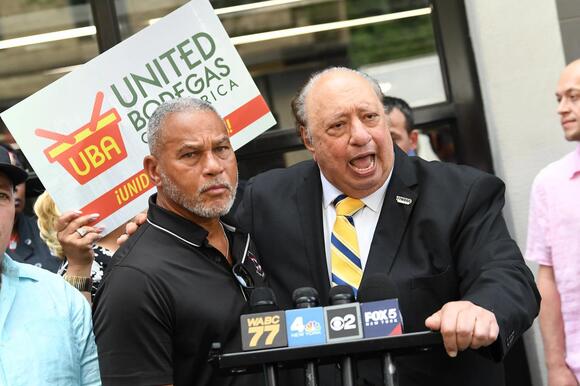
But for many bodega operators, this vision represents more of a threat than a solution. At a press conference held Monday outside a Gristedes supermarket in Midtown, members of the United Bodegas of America gathered to voice their opposition.

“Competing with the city having business is not going to be something that we can support,” said Radhames Rodriguez, president of the United Bodegas of America.

Rodriguez, who owns four bodegas in the Bronx and has been in the business for decades, painted a dire picture of what such a program might mean for him and others in the industry.

“Let’s say they sell a dozen eggs for $1 and the cost to us is $4 … that is going to destroy our business,” he said, emphasizing the impossibility of competing with a tax-exempt, rent-free operation.

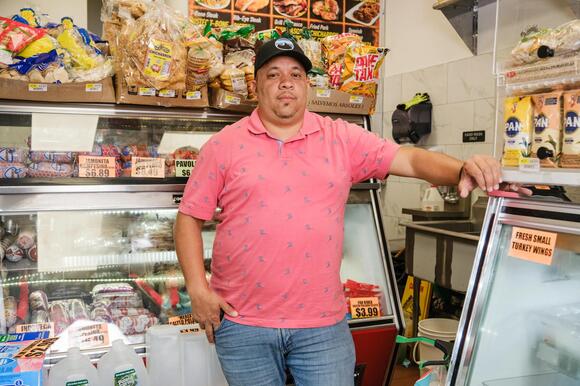
This concern isn’t isolated. Fellow Bronx bodega owner Miguel Valerio, who employs 12 people, said he worries not only about the future of his business but about the livelihoods of those who depend on it.

“I don’t want to lose my job,” said Valerio, a father of two.

“The government doesn’t want to do the same thing I do every day. I wake up at 5:00, I go to sleep by 11:00 every day,” he added.

“What is going to happen to people running their business? I have 12 people working for me, that’s what I care about.”

While Mamdani promotes the idea as a way to ease the financial burden on consumers, business owners argue the model lacks balance. They say small businesses are already struggling under inflation, rent hikes, and taxes — and adding government-sponsored competitors into the mix could be catastrophic.

“You can’t force us to pay taxes and then be our adversary,” said Rafael Garcia, who runs La Economica Meat Choice store on University Avenue in the Bronx.

Garcia noted that a significant portion of his clientele relies on government-financed food programs like EBT or SNAP. With city stores potentially offering lower prices, he fears many of these customers would abandon neighborhood bodegas for subsidized groceries.

During a Monday appearance on the “Plain English” podcast with Derek Thompson, Mamdani responded to criticisms, framing the project as experimental.

“If it isn’t effective at a pilot level, it doesn’t deserve to be scaled up,” the Queens assemblyman explained.

Mamdani defended the proposal as a reaction to mounting complaints from constituents about rising grocery prices.

“There is a sticker shock that New Yorkers tell me about all the time,” he said.

“And the most obvious examples here are eggs and milk and bread that have been cited again and again.”

However, many in the business community remain unconvinced. Critics have labeled the plan as a misguided attempt at government intervention in the private market — drawing comparisons to failed socialist models from the past.

“Socialism hasn’t been successful anywhere in the world. Even China has turned to capitalism,” said Francisco Marte, president of the Bodega and Small Business Association.

“Come on, this is stupid.”

Some business leaders even questioned the fundamental competence of government in running such operations.

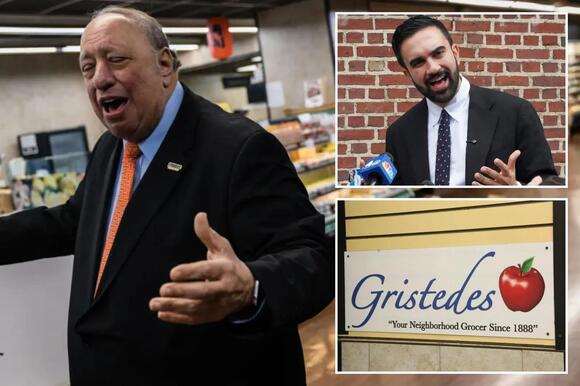
“City-owned supermarkets don’t work. Cities do not know how to run a business,” said John Catsimatidis, owner of the Gristedes chain and a longtime voice in the city’s retail food sector.

While the debate plays out in New York, it’s worth noting that the idea of municipal grocery stores isn’t new. Chicago’s progressive Mayor Brandon Johnson had floated a similar concept in response to the city’s “food deserts” — areas with limited access to fresh groceries. However, after private companies expressed interest in collaborating, Johnson hit pause on the municipal approach in favor of exploring public-private partnerships.

Elsewhere in America, especially in rural regions where supermarkets have vanished, city-run groceries have seen mixed results. In Baldwin, Florida — a town of just 1,400 — a government-run grocery opened in 2019 but closed in March after operating at a loss. Erie, Kansas, faced a similar outcome and eventually handed over operations to a private grocer while retaining city ownership of the building.

Still, Mamdani pointed to one municipal grocery success story. In St. Paul, Kansas — a town of 600 — a government-owned store has remained operational since 2013 after the local supermarket shut down. It’s the rare example of municipal intervention working under specific rural conditions — though whether that can translate to a dense and diverse city like New York remains uncertain.

As the conversation around Mamdani’s proposal grows louder, one thing is clear: while affordability remains a pressing issue for many New Yorkers, the path toward solving it is shaping up to be anything but straightforward. Small business owners say they are not opposed to solutions, but they want fairness — not competition from the very government that regulates and taxes them.

As Zohran Mamdani’s city-run grocery store proposal gains public attention, it opens a deep divide between affordability promises and small business survival. While the plan aims to ease rising food costs for New Yorkers, it simultaneously risks unsettling a fragile ecosystem of local bodegas that serve as lifelines in many neighborhoods. The debate now stands at a crossroads — one where economic justice meets entrepreneurial survival. Whether this pilot project becomes a progressive breakthrough or a miscalculated blow to the city’s corner stores remains a question only time, and voters, can answer.

Appreciating your time:

We appreciate you taking the time to read our most recent article! We appreciate your opinions and would be delighted to hear them. We value your opinions as we work hard to make improvements and deliver material that you find interesting.

Post a Comment:

In the space provided for comments below, please share your ideas, opinions, and suggestions. We can better understand your interests thanks to your input, which also guarantees that the material we offer will appeal to you. Get in Direct Contact with Us: Please use our “Contact Us” form if you would like to speak with us or if you have any special questions. We are open to questions, collaborations, and, of course, criticism. To fill out our contact form, click this link.

Stay Connected:

Don’t miss out on future updates and articles
Gunfire Rocks Southeast DC as Teen and Man Shot, Hunt for Suspect On

In a startling turn of events on a calm Sunday evening, a 16-year-old boy and an adult man were wounded in a sudden burst of gunfire at a Southeast D.C. intersection. The Metropolitan Police have now released a suspect’s photo tied to the shooting near Martin Luther King Jr. Avenue and Mellon Street. As both victims recover from non-life-threatening injuries, officials are urgently calling for public aid to help trace the suspect. The scene, once routine, now echoes with questions and a city’s search for answers.

STORY HIGHLIGHTS

  • Location: Southeast Washington, D.C., at Martin Luther King Jr. Ave & Mellon St SE

  • Time: Sunday, June 22, around 6:45 p.m.

  • Victims: 16-year-old boy and an adult male, both hospitalized with non-life-threatening injuries

  • Response: DC Fire and EMS responded promptly; both victims transported for treatment

  • Action: Suspect photo released; police seeking public assistance in identifying the individual

  • Status: Investigation ongoing; no arrests at this time

A quiet Sunday evening in Southeast Washington was disrupted by gunfire, leaving two individuals — including a teenage boy — wounded in a shooting that has now drawn citywide attention. In the aftermath, police have released a photo of a suspect believed to be involved in the incident, urging the public to help bring clarity to what transpired.

The Metropolitan Police Department reported that the shooting took place shortly before 6:45 p.m. on June 22, at the intersection of Martin Luther King Jr. Avenue and Mellon Street, Southeast. When officers arrived at the scene, they discovered a 16-year-old juvenile boy and an adult male suffering from gunshot wounds.

Both victims were found conscious and breathing, though clearly injured. Emergency services from DC Fire and EMS responded promptly, providing medical assistance before transporting the victims to nearby hospitals. Officials have confirmed that the injuries sustained by both individuals are considered non-life-threatening.

“This is an active and ongoing investigation,” the Metropolitan Police Department stated. “We are working diligently to determine the circumstances that led to this incident and to identify the person responsible.”

The department has since released a photo of the suspect, which they believe could play a critical role in resolving the case. Authorities are appealing to the public for assistance in identifying the individual shown in the image.

“We ask that anyone who recognizes this person or has any knowledge about the events leading up to the shooting come forward,” police added. “Even the smallest detail could be significant.”

While the motive remains unclear and no arrests have yet been made, law enforcement emphasized that community cooperation is vital in cases like these. The intersection where the shooting occurred is a known and often busy part of Southeast D.C., raising concerns about public safety and the potential for bystanders to have witnessed key moments.

Residents in the area have expressed concern over the frequency of such incidents, especially involving minors.

“It’s deeply troubling,” one neighbor shared anonymously. “We hope the police catch whoever did this before someone else gets hurt.”

The Metropolitan Police continue to canvass the area for surveillance footage and potential eyewitnesses.

Anyone with information related to the shooting is encouraged to contact the Metropolitan Police Department.

As the investigation unfolds, the photo of the suspect stands as a crucial lead in the effort to bring clarity and justice to Sunday evening’s shooting in Southeast D.C. While the victims continue to recover from their injuries, the Metropolitan Police urge anyone with information to come forward. In a city where safety and vigilance walk hand in hand, the call for public cooperation grows louder — because even one tip could turn silence into resolution.

Appreciating your time:

We appreciate you taking the time to read our most recent article! We appreciate your opinions and would be delighted to hear them. We value your opinions as we work hard to make improvements and deliver material that you find interesting.

Post a Comment:

In the space provided for comments below, please share your ideas, opinions, and suggestions. We can better understand your interests thanks to your input, which also guarantees that the material we offer will appeal to you. Get in Direct Contact with Us: Please use our “Contact Us” form if you would like to speak with us or if you have any special questions. We are open to questions, collaborations, and, of course, criticism. To fill out our contact form, click this link.

Stay Connected:

Don’t miss out on future updates and articles
Commas Food Hall Teases Silver Spring With Bold Flavors and Early Openings

After seasons of suspense and shifting timelines, Commas Food Hall has softly opened its gates inside Ellsworth Place mall in downtown Silver Spring. Nestled on the third floor, in the long-vacant space of the former F21 Red, this much-anticipated culinary hub welcomes visitors with a vibrant medley of flavors—from loaded fries to Nepalese dumplings and craft cocktails. Though full operations are yet to unfold, the current launch offers a tempting glimpse. With more vendors warming up behind the scenes, Commas now begins its theatrical entry into Silver Spring’s dining spotlight.

STORY HIGHLIGHTS

  • Commas food hall begins soft launch at Ellsworth Place mall, Silver Spring.

  • Located on third level, formerly occupied by F21 Red (closed 2019).

  • Open vendors include:

    • TATO’s (loaded fries, wedges, baked potatoes)

    • J&J Mex-Taqueria (Tex-Mex, also at Solaire Social)

    • Momo Hub (Nepalese dumplings)

    • C³ (beer, wine, cocktails, non-alcoholic drinks)

  • Mall spokesperson Jenn Buonanotte confirms more vendors will open “in coming weeks” pending inspections.

  • Remaining vendors to include MV Asian Kitchen, The Champs Kitchen, 6 Skewers, Claude Have Mercy, Tokoa Cheesesteaks.

  • Only three of twelve vendor spaces are still marked “coming soon.”

  • Original opening delayed from late 2023 due to renovation and permitting hurdles.

After several rounds of delays and much local anticipation, the Commas food hall has finally begun a soft launch inside Ellsworth Place mall in downtown Silver Spring. Positioned on the third floor in the space formerly occupied by F21 Red — a store that closed its doors in 2019 — the venue is beginning to welcome diners with an initial wave of vendors while the rest prepare to open in phases.

As of now, four of the planned eateries have officially opened for business, showcasing a curated mix of cuisines that reflect the cultural diversity of the area. One of the standout vendors is TATO’s, known for its comfort-style offerings such as loaded fries, wedges, and baked potatoes, served with a variety of toppings and sauces.

Joining TATO’s is J&J Mex-Taqueria, a family-run Tex-Mex operation based in D.C., already familiar to local foodies for its presence at the Solaire Social food hall. The eatery brings classic Mexican-American fusion dishes to the Commas lineup.

Another addition is Momo Hub, which introduces patrons to the flavors of Nepal through its specialty — momo dumplings, served both steamed and fried, and often accompanied by tangy sauces. Rounding out the currently open quartet is C³ (Commas Cocktail Bar), offering a broad beverage menu that includes beer, wine, signature cocktails, and non-alcoholic alternatives.

Mall representative Jenn Buonanotte confirmed the soft launch, stating,

“We’re excited to see Commas come to life after a long development process. Several vendors are in their final stages of inspection and permitting, and we expect them to open over the next few weeks.”

Commas, which was initially slated to open by the end of 2023, saw multiple postponements due to a range of issues related to construction, renovation, and approval processes. Though the delays stretched beyond the expected timeline, mall officials have maintained confidence that the project will reach full operational capacity soon.

“Out of the twelve total vendor spaces planned for Commas, only three remain unoccupied,” Buonanotte added. “These are clearly marked as ‘coming soon,’ and we’re in active talks to finalize their tenancy.”

Several new eateries are expected to open shortly as the rollout continues. These include MV Asian Kitchen, a pan-Asian concept; The Champs Kitchen, a vendor specializing in Caribbean-style street food; 6 Skewers, a Persian eatery focused on grilled meats and traditional sides; Claude Have Mercy, a seafood-forward restaurant; and Tokoa Cheesesteaks, a College Park favorite known for its loaded subs and regional flair.

While the full launch is still pending, the partial opening is being viewed by many as a step in the right direction for the food hall concept, which aims to reinvigorate the upper level of Ellsworth Place with a modern culinary hub. The variety of cuisines and the communal atmosphere are designed to draw in both casual mall-goers and destination diners alike.

As Commas Food Hall steps into the spotlight with its soft launch, it signals more than just the arrival of new eateries—it marks a fresh culinary chapter for downtown Silver Spring. With a careful rollout of diverse vendors and a space built for community, the food hall stands poised to become a lively anchor within Ellsworth Place. While a full launch still awaits, early visitors are already sampling the promise. If the initial offerings are any hint, Commas is cooking up a flavorful future worth watching.

Appreciating your time:

We appreciate you taking the time to read our most recent article! We appreciate your opinions and would be delighted to hear them. We value your opinions as we work hard to make improvements and deliver material that you find interesting.

Post a Comment:

In the space provided for comments below, please share your ideas, opinions, and suggestions. We can better understand your interests thanks to your input, which also guarantees that the material we offer will appeal to you. Get in Direct Contact with Us: Please use our “Contact Us” form if you would like to speak with us or if you have any special questions. We are open to questions, collaborations, and, of course, criticism. To fill out our contact form, click this link.

Stay Connected:

Don’t miss out on future updates and articles
Canada Pulls Plug on Digital Tax in Last-Minute Move to Woo US

In a sharp and sudden twist, Canada scrapped its Digital Services Tax just hours before its rollout, dodging what could have become a bruising trade battle with the United States. The tax, aimed at tech giants like Amazon and Google, sparked firm objections from Washington, with former President Trump calling it a “deal breaker.” As tensions cooled, trade talks are now set to resume. With global markets watching, this unexpected retreat may unlock a fragile window of economic cooperation—if both sides play their next moves with care.

STORY HIGHLIGHTS

  • Canada cancels Digital Services Tax just hours before enforcement deadline.

  • 3% tax would have applied to major U.S. tech firms like Google, Amazon, Meta, and Apple.

  • Trump threatened tariffs, calling the tax a “blatant attack” on American innovation.

  • U.S. Commerce Secretary welcomes Canada’s decision, markets rally in response.

  • Finance Minister Champagne to introduce repeal legislation in Parliament.

  • Canada emphasizes support for a multilateral digital taxation framework.

  • Canada remains a critical U.S. trade partner, with exports and imports exceeding $760 billion in 2023.

  • Biden administration also challenged the DST on USMCA compliance grounds.

In a last-minute reversal that could reshape the trajectory of North American trade relations, Canada has announced it is abandoning its planned Digital Services Tax (DST) — a move that comes mere hours before the levy was set to take effect on Monday. The sudden policy shift is widely seen as a strategic effort to salvage trade negotiations with the United States, which had reached a boiling point in recent days.

The decision was made public late Sunday night through a statement issued by Canada’s finance ministry. It noted that Canadian Prime Minister Mark Carney and U.S. President Donald Trump would now resume direct trade talks, with the goal of reaching a comprehensive agreement by July 21. The announcement came after mounting pressure from Washington, which viewed the DST as a direct threat to American tech giants and a possible violation of existing trade obligations under the North American trade framework.

The tax, originally announced in 2020, was designed to ensure that large multinational technology companies generating significant revenue from Canadian users contribute their fair share to the country’s economy. Specifically, it proposed a 3% tax on digital services revenues exceeding $20 million annually, retroactive to 2022. Had it been implemented, the measure would have impacted major U.S.-based firms such as Amazon, Meta, Alphabet’s Google, and Apple.

In recent weeks, the tension surrounding the DST had reached a critical level. Former U.S. President Donald Trump, who had already paused trade discussions on Friday in response to the proposed tax, did not hold back in his criticism.

“This was a blatant attack on American innovation,” Trump stated, accusing Canada of undermining the principles of free trade. “If this tax went forward, there would have been no deal — not now, not ever.”

Adding to the pressure, Trump declared on Sunday that unless Canada immediately reversed its stance, he would impose a new round of tariffs on Canadian exports within the week — a move that risked plunging bilateral relations into turmoil after a period of relative calm.

Responding to the change, U.S. Commerce Secretary Howard Lutnick posted a reaction on X (formerly Twitter), expressing his satisfaction with Canada’s decision.

“Thank you Canada for removing your Digital Services Tax, which was intended to stifle American innovation and would have been a deal breaker for any trade deal with America,” Lutnick wrote.

The policy retreat was also framed by Canadian officials as a practical decision grounded in the broader goal of achieving an international solution. Finance Minister François-Philippe Champagne confirmed that legislation would soon be introduced to repeal the Digital Services Tax Act entirely.

“The DST was originally introduced to address the fact that many large technology companies operating in Canada may not otherwise pay tax on revenues generated from Canadians,” Champagne said in the statement. “However, Canada’s preference has always been a multilateral agreement related to digital services taxation.”

Analysts suggest that while Canada’s DST had noble intentions rooted in tax equity and digital sovereignty, the political cost of maintaining the policy proved too high in the face of U.S. opposition. The United States, after all, remains Canada’s largest trading partner in goods and services — and the stakes of the ongoing negotiations could not be higher.

According to U.S. Census Bureau data, Canada bought $349.4 billion worth of American goods last year and exported $412.7 billion to the U.S., highlighting the deeply intertwined economic relationship between the two nations. Though Canada had managed to escape broad tariffs imposed earlier in April, it still faces steep 50% duties on its steel and aluminum exports to the American market — a point of contention that continues to simmer in the background.

The Biden administration, too, had previously flagged the DST as problematic, formally requesting trade dispute consultations earlier this year. U.S. officials argued that the tax was inconsistent with Canada’s obligations under the USMCA (United States-Mexico-Canada Agreement), formerly known as NAFTA.

This latest development comes after Carney and Trump met at the G7 summit earlier in the month, where both leaders reportedly agreed to wrap up a new economic agreement within 30 days. Though the meeting had been seen as a signal of cooperation, tensions flared almost immediately afterward when details of Canada’s DST surfaced again.

Now, with the DST effectively shelved and legislation to repeal it on the horizon, diplomatic space has opened once more for constructive dialogue. Wall Street responded positively to the news, with futures reaching record highs Monday morning. The market reaction reflects investor optimism that the renewed talks between the U.S. and Canada could lead to a smoother economic path ahead.

While the final shape of the upcoming trade deal remains unclear, the removal of the DST marks a significant reset in U.S.-Canada relations — one that could determine the contours of North American commerce for years to come.

Canada’s decision to withdraw its Digital Services Tax marks a pivotal shift in its trade diplomacy with the United States. By stepping back from a measure that risked igniting tariff retaliation and diplomatic discord, Canada has chosen negotiation over confrontation. As both nations now return to the table with renewed urgency, the coming weeks will determine whether this tactical retreat fosters a stable trade framework—or merely postpones deeper conflict. For now, the halted tax offers a fragile but welcome pause, opening the door to economic compromise in a high-stakes cross-border relationship.

Appreciating your time:

We appreciate you taking the time to read our most recent article! We appreciate your opinions and would be delighted to hear them. We value your opinions as we work hard to make improvements and deliver material that you find interesting.

Post a Comment:

In the space provided for comments below, please share your ideas, opinions, and suggestions. We can better understand your interests thanks to your input, which also guarantees that the material we offer will appeal to you. Get in Direct Contact with Us: Please use our “Contact Us” form if you would like to speak with us or if you have any special questions. We are open to questions, collaborations, and, of course, criticism. To fill out our contact form, click this link.

Stay Connected:

Don’t miss out on future updates and articles