Staff Reporter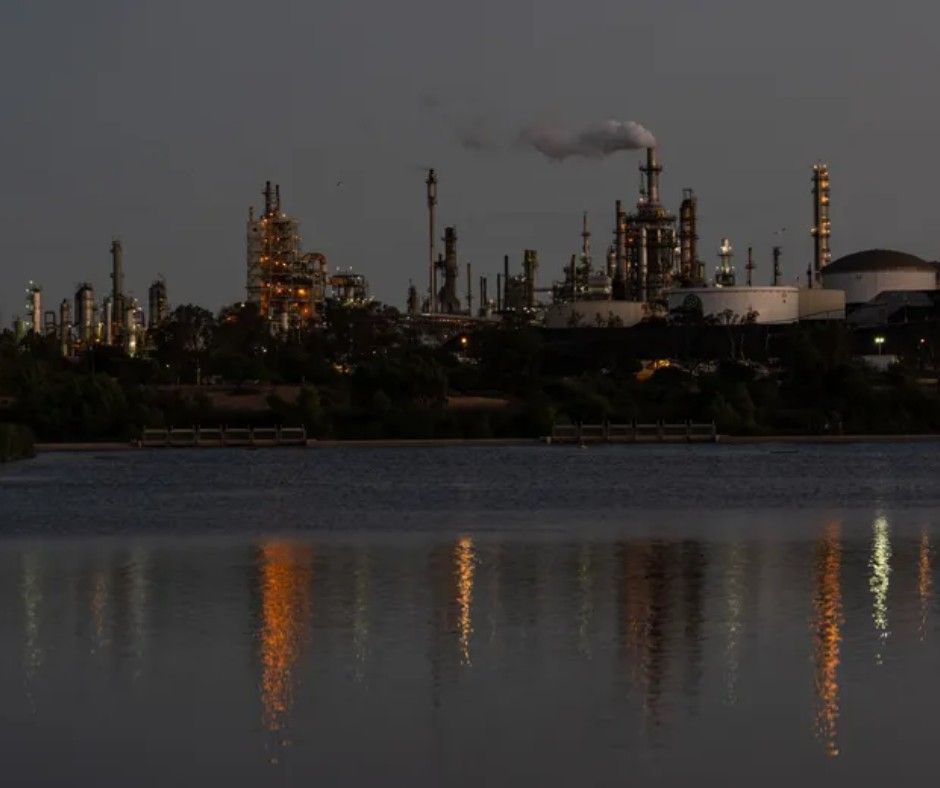
Thirty years ago, Willie Cruz never imagined his career would vanish overnight. Working in the environmental department at the Powerine Oil Company in Santa Fe Springs, southeast of Los Angeles, he was proud of his job and what it represented. Then came the news — the refinery was shutting down for good.
The closure shattered his sense of stability. “I was shocked,” Cruz recalled. “You don’t expect the whole operation to disappear like that.”
Back then, Cruz was forced to make a life-changing decision. Instead of staying in an unstable oil industry, he turned toward healthcare — studying respiratory therapy, a choice inspired partly by his own struggles with asthma. A federal job training program covered his tuition, helping him transition from fossil fuels to patient care.
“I thought it was pretty cool, you know — go from polluting to helping,” Cruz said with a smile.
Now, three decades later, his son, Wilfredo Cruz, is standing at a similar crossroads.
🔹 Story Highlights (Read Box)
-
Phillips 66 refinery in Los Angeles and Valero refinery in Benicia are set to close, impacting 18% of California’s refining capacity.
-
Thousands of oil workers expected to lose jobs in the next few years.
-
State job training funds for displaced oil workers will run out by 2027.
-
California fell from 3rd to 8th place in national crude oil production since 2014.
-
Workers say the energy transition lacks a clear roadmap for their future.
A New Generation, the Same Struggle
For Wilfredo, 37, the oil business seemed like a reliable path — good pay, benefits, and stability. For twelve years, he worked as a pipe fitter at the Phillips 66 refinery in Los Angeles, earning about $118,000 a year. It wasn’t glamorous, but it was honest work.
Now, the refinery where he has spent over a decade is preparing to shut down by the end of this month, part of California’s ongoing effort to move away from fossil fuels.
“It’s like déjà vu,” Wilfredo said. “My dad went through this, and now I’m in the same spot.”
He’s already preparing for a new chapter — enrolled in an online cybersecurity program, tuition paid by a state workforce program that will soon expire. Still, he feels uneasy.
“There’s not really a clear plan to help oil workers transition into new industries,” he said. “You feel kind of forgotten.”
A State in Transition — and Tension
California’s climate policies are driving a massive transformation in its energy landscape, but they’re also triggering economic anxiety.
The Phillips 66 refinery plans to halt fuel production by the end of 2025, citing “market dynamics.” Meanwhile, Valero announced it will idle or cease refining operations at its Benicia refinery by next April.
These closures together represent nearly one-fifth of California’s total refining capacity, producing essential fuel products like gasoline, diesel, and jet fuel.
The California Energy Commission and state regulators are attempting to mitigate the economic fallout. Negotiations are underway to delay the Valero shutdown, while a recent proposal to penalize oil companies for high profits was quietly withdrawn.
Governor Gavin Newsom, once vocal about “taking on big oil,” has since softened his approach — approving faster oil well permitting in the Central Valley and supporting short-term measures to stabilize gas prices.
Critics say this inconsistency leaves both companies and workers uncertain.
Economic Shockwaves in Local Communities
The Valero refinery is more than just an industrial site — it’s the economic backbone of Benicia, a small city in the Bay Area. The company contributes roughly $7.7 million in annual taxes, about 13% of the city’s total revenue, according to City Manager Mario Giuliani.
“It’s a significant and seismic impact to the city,” Giuliani said. “We’re talking about lost jobs, lost revenue, and an identity that’s been tied to the refinery for decades.”
Across the state, similar stories are unfolding. Between 2018 and 2024, 46 refineries have closed in California, according to the Employment Development Department. The fossil fuel sector still employs around 94,000 people, but that number is shrinking fast.
A 2021 study by the Political Economy Research Institute at the University of Massachusetts Amherst estimated that nearly 58,000 oil and gas workers will lose their jobs in California by 2030, with more than half needing to find new careers.
Searching for a Just Transition
To ease the blow, California lawmakers created the Displaced Oil and Gas Worker Fund in 2022, providing $30 million in job training and transition support across oil-producing regions like Kern County and Contra Costa County.
Governor Newsom also set aside $20 million in the 2022–2023 state budget for a pilot project that trains laid-off oil workers to plug abandoned oil wells — a growing environmental need in the state.
However, funding for these programs is set to expire in 2027, and lawmakers have not yet agreed on extending it.
“California needs a clear plan for the thousands of workers losing their livelihoods in this energy transition,” said Faraz Rizvi, policy and campaign manager at the Asian Pacific Environmental Network. “We’re in solidarity with displaced workers — but they deserve real pathways to good, secure jobs.”
Industry Fights Back
The oil industry isn’t staying quiet. Jodie Muller, president and CEO of the Western States Petroleum Association, said California’s policies are pushing workers out of good-paying, blue-collar jobs.
“The extremists fighting to close California refineries should explain why they’re okay with destroying some of the best jobs out there — because we certainly are not,” she said.
Industry representatives argue that refinery jobs remain among the few that offer strong wages and benefits without requiring a college degree.
Life on the Edge
For workers like Wilfredo Cruz, it’s not just about money — it’s about safety, dignity, and identity. Every day, when he gets home, he showers immediately before greeting his son, worried about chemical exposure. He won’t even let his two-year-old ride in the car he takes to work.
“People think this is just another job,” he said quietly. “But for us, it’s our whole life.”
As California’s refinery closures accelerate and climate policies tighten, thousands of families are asking the same question: What comes next?
Appreciating your time:
We appreciate you taking the time to read our most recent article! We appreciate your opinions and would be delighted to hear them. We value your opinions as we work hard to make improvements and deliver material that you find interesting.
Post a Comment:
In the space provided for comments below, please share your ideas, opinions, and suggestions. We can better understand your interests thanks to your input, which also guarantees that the material we offer will appeal to you. Get in Direct Contact with Us: Please use our “Contact Us” form if you would like to speak with us or if you have any special questions. We are open to questions, collaborations, and, of course, criticism. To fill out our contact form, click this link.
Stay Connected:
Don’t miss out on future updates and articles.