Staff Reporter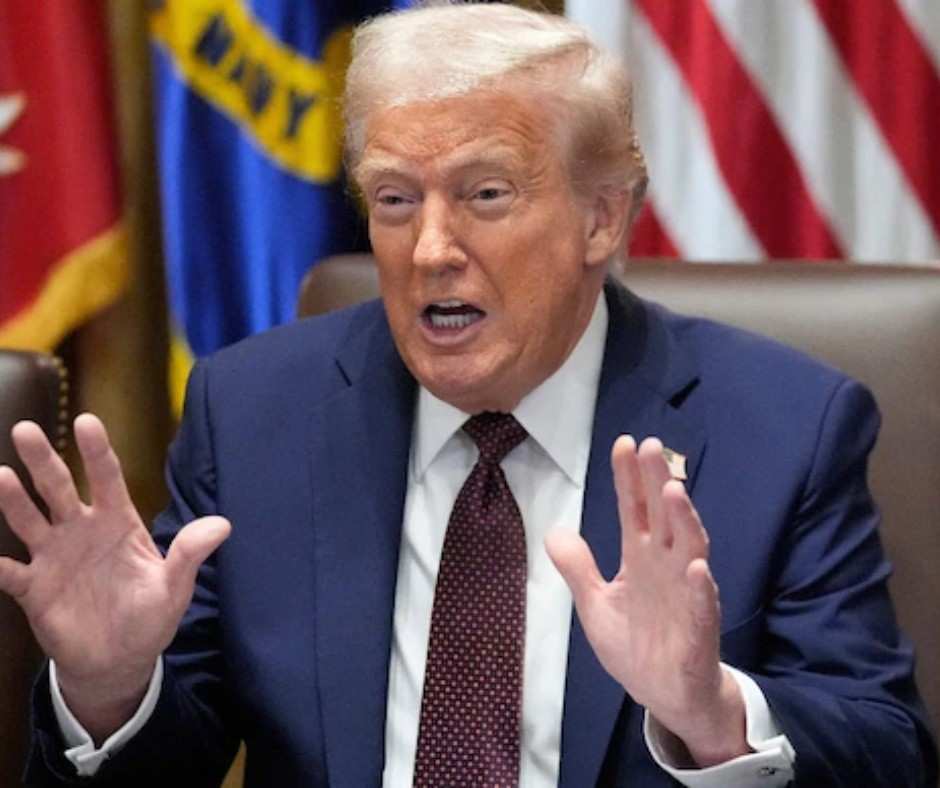
For decades, Chicago has been used as a political talking point, often portrayed as a city spiraling out of control. Critics have described it with harsh language, sometimes overlooking the city’s actual crime data. Former President Donald Trump revived this narrative, calling Chicago a “hellhole” and the “murder capital of the world” during a press conference.
But according to FBI and Chicago Police Department statistics, those claims don’t stand up to scrutiny. Chicago’s crime rate has been falling steadily in recent years, and its homicide numbers are lower than many other U.S. cities.
📌 Story Highlights
-
Trump labeled Chicago a “hellhole” and “murder capital of the world.”
-
Federal crime data shows 22 cities have higher homicide rates than Chicago.
-
Chicago homicide rate in 2024: 17 per 100,000 people.
-
Birmingham, Alabama recorded the nation’s highest rate: 58 per 100,000.
-
Chicago murders dropped 31% in 2025, lowest midyear figure since 2014.
-
Experts stress investment in community-based programs over troop deployment.
Trump’s Statement and the Reality Behind It
Standing in the Oval Office, Trump painted a grim picture of Chicago.
“Chicago is a hellhole right now,” he said, insisting the city had become the “murder capital of the world.”
The words echoed widely, but experts and law enforcement agencies pointed out that they were not accurate. FBI data shows Chicago is not even in the top 20 when it comes to homicide rates.
“There are just a lot of cities that have higher homicide rates, and do most years,” explained John Roman, a senior fellow at the University of Chicago’s NORC research group.

Comparing Chicago to Other U.S. Cities
Chicago, home to about 2.64 million people, recorded 17 homicides per 100,000 residents in 2024.
Meanwhile, Birmingham, Alabama, with a population under 200,000, reported 58 per 100,000 — more than three times Chicago’s rate. St. Louis and Memphis also posted far higher numbers. In total, 22 cities surpassed Chicago’s homicide rate, underscoring the gap between perception and reality.
A Decline in Violence
Despite Trump’s claims, data reveals a sharp downward trend in Chicago crime.
From January through August 2025, the city logged 278 murders, down 31% compared to the same stretch in 2024. Police officials noted this was the lowest midyear figure since 2014.
Even more striking, the summer of 2025 recorded the fewest homicides since 1965, according to reporting by WBEZ.
“It’s been such an encouraging year, not just in Chicago but across the country,” Roman said. “Homicides are down more than 30 percent in Chicago. Nationally, the number is closer to 20 percent. Chicago is doing about 50 percent better than the national average.”

What’s Driving Violence — And What Isn’t
Experts emphasize that today’s violence does not follow the same patterns seen in past decades.
“For those who understand how violence plays out, we know that most incidents — particularly gun-related — are spontaneous,” said Lance Williams, professor at Northeastern Illinois University.
“Although individuals may be gang affiliated, violence doesn’t play out along gang lines like it did 30 years ago. It’s more interpersonal conflict,” he added.
Williams noted that someone at risk of being shot is more likely to be attacked by a member of their own circle than by a rival gang.
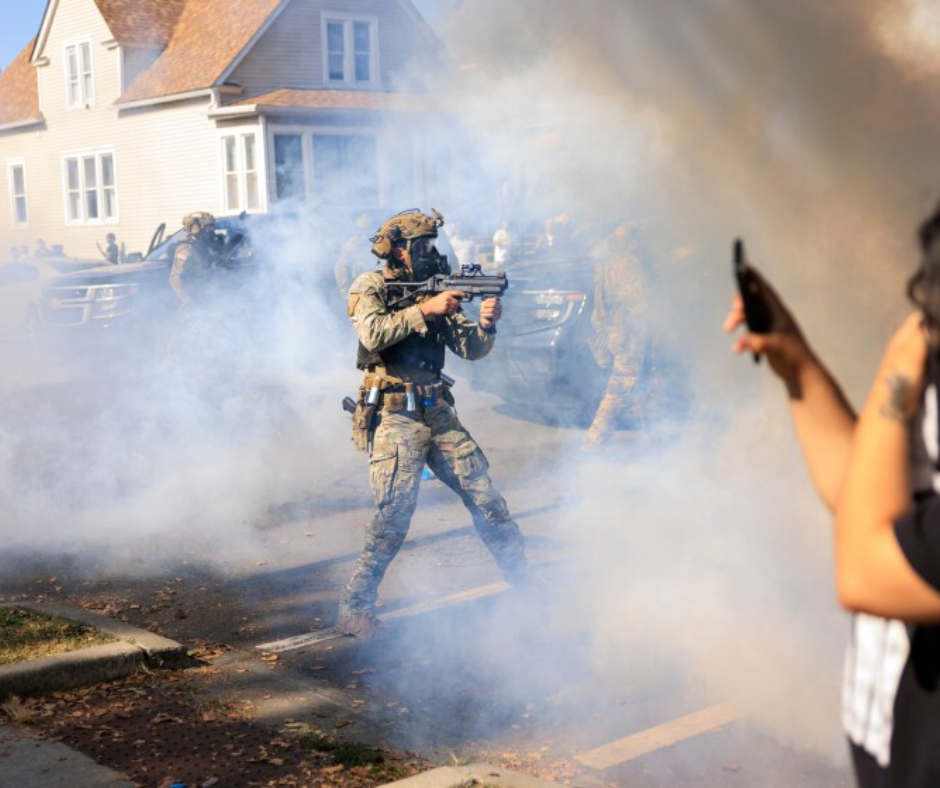
“That violence is more interpersonal, and there’s nothing federal troops or law enforcement can really do to get in front of that,” he said. “It has to be addressed by people who are part of the community, who know the culture, who speak the language. And even they find it difficult.”
Why More Police or Troops Aren’t the Answer
While Chicago officials continue to fight crime, data shows that simply increasing armed patrols or deploying the National Guard would not create long-term solutions.
“That’s likely to cut crime in the short term. But it’s not sustainable,” Roman said. “It’s very expensive, and the real solutions come from outside the criminal justice system.”
Programs that strengthen the social safety net, provide jobs, and support young people have shown better long-term results in reducing violence.

The Role of Community Programs
One promising initiative has been CARE (Crisis Assistance Response and Engagement), a city program designed to handle 911 calls related to mental health crises. It aims to provide specialized support where traditional police responses may fall short.
But CARE operates only during limited hours in seven districts, and its funding comes from federal COVID-19 relief dollars set to expire at the end of 2025.
Roman cautioned that without renewed investment, progress could stall. “A lot of the recent decline in violence came from federal funding put in place after the pandemic. That money gave state and local governments the ability to invest in real solutions.”
Williams agreed. “My big concern is that if federal troops are deployed, we’ll have another problem on our hands. It could escalate tensions,” he said. “It’s not just a bad idea; it’s a waste of money.”
A City Misunderstood
Chicago continues to struggle with crime in certain neighborhoods, but overall, the numbers show steady improvement.
The narrative of Chicago as a “hellhole” may resonate politically, but the reality is more complex: crime is falling, community programs are helping, and experts argue that investment in long-term solutions — not military deployment — is what will truly move the city forward.
Chicago continues to face challenges with crime, particularly in certain neighborhoods, but federal and local data show a clear decline in homicides and violent offenses. While political rhetoric often labels the city a “hellhole,” the numbers tell a different story: Chicago’s homicide rate is lower than many other U.S. cities, and long-term progress is being made. Experts agree that investing in community-led programs, mental health services, and social safety nets will do more to sustain this decline than deploying federal troops. The future of Chicago’s safety, they argue, depends less on military presence and more on continued support for evidence-based, community-driven solutions.
Appreciating your time:
We appreciate you taking the time to read our most recent article! We appreciate your opinions and would be delighted to hear them. We value your opinions as we work hard to make improvements and deliver material that you find interesting.
Post a Comment:
In the space provided for comments below, please share your ideas, opinions, and suggestions. We can better understand your interests thanks to your input, which also guarantees that the material we offer will appeal to you. Get in Direct Contact with Us: Please use our “Contact Us” form if you would like to speak with us or if you have any special questions. We are open to questions, collaborations, and, of course, criticism. To fill out our contact form, click this link.
Stay Connected:
Don’t miss out on future updates and articles.