Tag Archives: Philly events

Hoagie Martini

Philly’s Hoagie Martini: The Bold New Cocktail Taking Liberty Kitchen by Storm

Philadelphia is known for its rich food culture, from cheesesteaks to soft pretzels, but this fall, the city is getting a bold new addition: the Hoagie Martini. Combining the beloved Philly hoagie with a handcrafted martini, this inventive creation is turning heads and taste buds alike.

The Hoagie Martini is the brainchild of Art in the Age, Philadelphia’s boutique bottle brand, and Liberty Kitchen, the Fishtown hotspot famous for its hoagies. What makes this drink unique is its use of Genoa salami fat-washed Art in the Age Vodka, blended with Cinzano Vermouth, and topped with drops of olive oil. Each serving is garnished with a skewered slice of Liberty Kitchen’s Italian Salumeria hoagie, featuring Italian cured meats, house creamy balsamic dressing, mild provolone, lettuce, tomato, onion, and spicy pepper relish.

The drink is described as a “bold and briny sipper,” and will be available for one day only, on October 25, from noon to 5 p.m., both inside Liberty Kitchen’s dining room and in the adjacent garden at 1400 N Front St., Philadelphia.

Story Highlights

  • Event Date & Time: October 25, 12 PM – 5 PM

  • Location: Liberty Kitchen, 1400 N Front St., Philadelphia

  • Price: $13 per Hoagie Martini

  • Main Ingredients: Art in the Age Vodka (Genoa salami fat-washed), Cinzano Vermouth, olive oil, Liberty Kitchen Italian hoagie slice

  • BYO Alcohol Policy: Liberty Kitchen allows guests to bring their own alcohol

Talking about the creation, Steven Grasse, Founder and Owner of Art in the Age, explained the inspiration behind the Hoagie Martini:

“We conquered the Weenie Martini, so as a Philadelphia company, the only logical next step was a Hoagie Martini. Our new vodka is a great canvas for infusions, fat-washing, and all kinds of strange, amazing flavors. This has always been what we try to do with Art in the Age.”

He emphasized that the Hoagie Martini reflects Philly’s adventurous food culture, bringing together local flavors in a way that surprises and excites.

On the Liberty Kitchen side, Executive Chef Beau Neidhardt shared his excitement for the collaboration:

“I love a good martini, so when the idea of serving them alongside our hoagies came up, I was all in. We don’t serve alcohol, but we are BYO, which makes it even more fun.”

Neidhardt highlighted the experience the drink creates:

“It’s not every day you get to sit in our garden, crush a hoagie, and wash it down with an ice-cold martini. People are going to have a good time because honestly, who can turn down a hoagie and a martini?”

The Hoagie Martini is crafted using the newly launched Art in the Age Vodka, a recent addition to the brand’s lineup of premium spirits. The collection also includes Art in the Age Gin, Dunce Straight Bourbon Whiskey, Graverobber Unholy Rye Maple Whiskey, Old Baldy Spiced Apple Whiskey, and Siege of Wolves Spiced Rum. These spirits are widely available in Pennsylvania state liquor stores, giving cocktail enthusiasts a chance to explore a variety of flavors.

The Hoagie Martini is not just a drink; it’s a celebration of Philadelphia’s culinary creativity, a fusion of classic hoagie ingredients with a bold, briny martini twist. For locals and visitors alike, this one-day event offers a chance to enjoy a unique Philly experience that combines two iconic traditions in one unforgettable sip.

Appreciating your time:

We appreciate you taking the time to read our most recent article! We appreciate your opinions and would be delighted to hear them. We value your opinions as we work hard to make improvements and deliver material that you find interesting.

Post a Comment:

In the space provided for comments below, please share your ideas, opinions, and suggestions. We can better understand your interests thanks to your input, which also guarantees that the material we offer will appeal to you. Get in Direct Contact with Us: Please use our “Contact Us” form if you would like to speak with us or if you have any special questions. We are open to questions, collaborations, and, of course, criticism. To fill out our contact form, click this link.

Stay Connected:

Don’t miss out on future updates and articles.

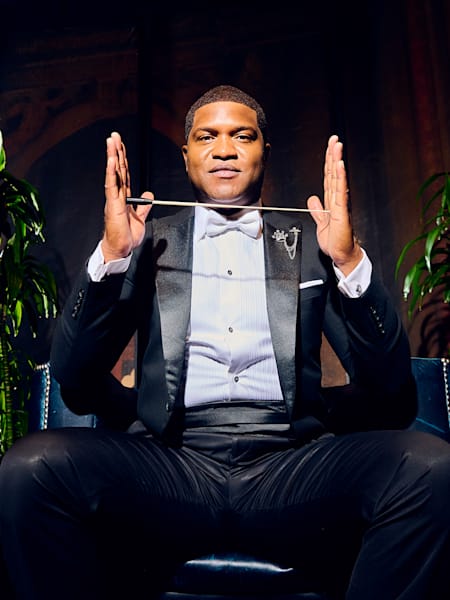
Orchestra Noir: Jason Rodgers Reimagines 2000s R&B and Hip-Hop for Philly Fans

For the first time since founding Orchestra Noir in 2016, Philadelphia-born conductor Jason Ikeem Rodgers is finally bringing his musical sensation to the city where it all began. Known for blending classical orchestration with hip-hop and R&B, Rodgers says he’s “very much looking forward” to performing in front of his hometown audience.

Story Highlights

  • Orchestra Noir makes its Philadelphia debut on Oct. 18 at Miller Theater.

  • Performance features orchestral reinterpretations of 2000s hip-hop and R&B hits.

  • Jason Ikeem Rodgers, a North Philadelphia native, brings personal and professional roots to the show.

  • Audience encouraged to dress casually and participate actively — no traditional concert etiquette.

  • Rodgers’ mission: increase African American representation in classical music and inspire young musicians.

  • Recent educational residencies expose underserved youth to professional orchestra musicians of color.

“I’ve played with all kinds of superstars, from hip-hop artists to rock ‘n roll stars,” Rodgers explains. “The orchestra has been applauded and admired all over the country, and will soon be traveling worldwide. Yet I’ve never played in the town where I was born.”

The reason for the long wait, Rodgers admits, is not entirely clear. “Maybe it was the idea of playing in front of family and friends that made me very nervous,” he says thoughtfully. “I’m not sure exactly why it’s taken so long, but I’m looking forward to playing in Philly very soon.”

Ensemble Arts Philly will present “Orchestra Noir: The Culture 2000 Tour” on October 18 at the Miller Theater, showcasing reimagined 2000s hip-hop and R&B hits in a full orchestral arrangement. The performance promises an experience unlike any traditional concert, highlighting Rodgers’ mission to celebrate the cultural achievements of African American music pioneers across genres, including classical.

Growing up in the projects of North Philadelphia, Rodgers’ path to musical success was not straightforward. It was during middle school that a teacher, Virginian T. Lam, recognized his potential. Rodgers recalls how, despite a family full of musicians, it was Lam who changed the trajectory of his life.

“I had always wanted to play the piano and I knew she could be just the one to teach me,” Rodgers says. “I hounded her until she agreed. She took me under her wing, became my teacher, my inspiration, my mentor. She even treated me like a son.”

Rodgers explains that Lam’s guidance went beyond piano lessons. “She not only taught me the piano, but also staging and theater. In the end, it was she who is most responsible for my career.”

After graduating from the School District of Philadelphia, Rodgers began his career as an instrumental music teacher in the same district. He now returns to the city with Orchestra Noir, ready to give Philly audiences a performance that is both innovative and personal.

“Philly gave me my musical foundation,” Rodgers says. “From growing up here to teaching music in this very school system, this city is where it all started for me. To return now — finally — with this tour and Orchestra Noir is something I’ve dreamed of for a long, long time.”

What makes Orchestra Noir truly unique is its approach to concert experiences. Rodgers emphasizes that audiences should expect more than a traditional sit-down performance.

“Our concerts are not the typical concerts you might expect,” Rodgers explains. “Ours is not a sit-down event. There are no programs. It’s a party atmosphere, like being at a Black cookout. We encourage you to get up out of your seat. We want you to dance, to have fun. We don’t want you to feel as though you have to follow some sort of etiquette.”

Rodgers also encourages casual attire. “We encourage people to dress comfortably. Wear your jeans, wear your sneakers. You’ll be dancing. You’re coming here to have fun,” he adds.

Beyond entertainment, Rodgers and Orchestra Noir focus on inclusivity in classical music, a field traditionally dominated by white musicians.

“My mission is to change things, even a little, in the predominately white, European-based classical music tradition,” Rodgers says. “I know today, in the field of classical music, I’m seen by many as a foreigner. I don’t fit the prototype; I’m from the hood. But someday, I’d like to change all that and bring more African Americans into the wonderful world of the classics.”

Orchestra Noir has also been active in music education, inspiring young, minority musicians through education-centered concerts. Recently, the orchestra completed a three-day residency in Montgomery, Alabama, giving underserved youth a chance to experience professional orchestral musicians of color firsthand.

Frances Egler, vice president of Theatrical Programming and Presentations, praises Rodgers’ innovative approach. “With this first performance in our Miller Theater, we applaud Rodgers for his creativity, his commitment to the future of orchestral instrumentation, and his passion for arts education.”

Rodgers maintains a lifelong bond with his middle school teacher. “She’s now 75 years old,” he shares. “And she babysits my children. I do love her like a mother.”

For more information on Jason Rodgers and the “Orchestra Noir: The Culture 2000 Tour,” visit www.ensembleartsphilly.org.

Appreciating your time:

We appreciate you taking the time to read our most recent article! We appreciate your opinions and would be delighted to hear them. We value your opinions as we work hard to make improvements and deliver material that you find interesting.

Post a Comment:

In the space provided for comments below, please share your ideas, opinions, and suggestions. We can better understand your interests thanks to your input, which also guarantees that the material we offer will appeal to you. Get in Direct Contact with Us: Please use our “Contact Us” form if you would like to speak with us or if you have any special questions. We are open to questions, collaborations, and, of course, criticism. To fill out our contact form, click this link.

Stay Connected:

Don’t miss out on future updates and articles.

Philadelphia’s Puerto Rican Day Parade 2025: Flags, Music, and Culture Take Over the Parkway

Philadelphia will come alive on Sunday, September 28, 2025, as the city hosts its annual Puerto Rican Day Parade, a festival of music, food, dance, and community pride. From the Benjamin Franklin Parkway to the heart of North Philadelphia, Boricuas from across the city will gather to celebrate their heritage, waving flags, sharing food, and performing cultural traditions that span centuries.

Picture the scene: Puerto Rican flags, affectionately called la monoestrellada – the “one-starred” – flutter everywhere. The air is rich with the aroma of alcapurrias and other fritters, while salsa rhythms and Bad Bunny’s reggaetón fill the streets. Conversations mix Spanish and English in the Spanglish typical of the diaspora, creating a unique linguistic soundtrack to the festivities.

“The parade is chaotic, loud, and impossible not to love,” says the author, a Puerto Rican born on the island and now teaching in Philadelphia. “It is a space where we perform our Puerto-Ricanness in myriad ways, from eating traditional foods to dancing salsa badly but enthusiastically.”

Story Highlights

  • Philadelphia is home to the second-largest Puerto Rican community outside New York City.

  • The Puerto Rican Day Parade 2025 showcases music, dance, food, and cultural symbols.

  • Identity is fluid: island-born “islandricans” and diaspora-born “diasporicans” experience Puerto Rican culture differently.

  • Parade symbols reflect pride, historical roots, political statements, and personal expressions of culture.

  • Challenges like poverty, violence, and inequity in Fairhill and West Kensington highlight the community’s resilience.

For many Puerto Ricans, identity is complicated. Diasporicans – Puerto Ricans living in the U.S. – navigate mixed feelings about culture, language, and history.

“I am both Boricua and Latino, de allá y de aquí,” says the author. “I grew up colonized yet now live in the colonizing country. I think in two languages. I eat arroz, habichuelas y carne guisada and also hamburgers. I like Guns N’ Roses and Calle 13. Identity is both complicated and celebrated at the parade.”

Parades like the Puerto Rican Day Parade serve as public demonstrations of community identity. They use symbols, music, and traditions to communicate what it means to be Puerto Rican – whether island-born or diaspora-born, historically rooted or contemporary, traditional or alternative.

Waving la monoestrellada can signify pride in culture and history, a connection to the island as a U.S. territory, or even a subtle call for independence. Dancers often perform Indigenous, Spanish, and Afro-Caribbean dances, reflecting the multiple cultural influences within the Puerto Rican identity.

Language also plays a role in identity. Bilingualism is common among Boricuas, but proficiency in Spanish and English can shape perceptions of authenticity. Islandricans may speak Spanish predominantly, while diasporicans lean toward English.

“Speaking Spanish with a gringo accent could mark you as an outsider on the island,” the author explains, “while not speaking English in the diaspora can make you seem backward. It’s complicated, but it reflects the fluid nature of Puerto Rican identity.”

Cultural anthropologist Yarimar Bonilla recently highlighted this ambivalence in her op-ed about Bad Bunny’s 30-date concert series in Puerto Rico.

“The concert is not simply an unprecedented artistic achievement; it is also a political statement,” Bonilla wrote. “Arraigo, or rootedness, is not what binds us, but what empowers us.”

Bad Bunny’s concerts, designed to favor island residents while celebrating Puerto Rican history, are seen as a gesture of love for the island and its people, regardless of whether they live on Puerto Rico or abroad.

Philadelphia has been home to Puerto Ricans for more than a century and is now a proud hub of Latin identity. According to U.S. Census data, over half of all Latinos in the city are Puerto Rican, making Philly the second-largest Puerto Rican diaspora in the U.S., after New York City.

Yet, the parade also reflects ongoing challenges. Neighborhoods like Fairhill and West Kensington face long-standing issues with poverty, violence, and inequities in health and housing. The parade becomes a public assertion of resilience, cultural pride, and community love.

Historically, the U.S. relationship with Puerto Rico has been complicated. From post-World War II economic aid to unethical medical testing in the 1950s and a slow response after Hurricane Maria in 2017, Puerto Rican communities have experienced both support and neglect. These histories add layers of meaning to the parade, emphasizing both pride and reflection.

“The parade demonstrates a rootedness that is complex and plural,” the author reflects. “It is a gesture of love that straddles comfort and grief. Identity is fluid, traditions shift, and political relationships change – yet our culture endures.”

In 2025, the Puerto Rican Day Parade in Philadelphia promises to be a vibrant, joyful, and reflective celebration of Puerto Rican culture, heritage, and resilience. From waving la monoestrellada to sharing food and dance, the parade is a reminder that identity, community, and love are ever-evolving but deeply rooted.

Appreciating your time:

We appreciate you taking the time to read our most recent article! We appreciate your opinions and would be delighted to hear them. We value your opinions as we work hard to make improvements and deliver material that you find interesting.

Post a Comment:

In the space provided for comments below, please share your ideas, opinions, and suggestions. We can better understand your interests thanks to your input, which also guarantees that the material we offer will appeal to you. Get in Direct Contact with Us: Please use our “Contact Us” form if you would like to speak with us or if you have any special questions. We are open to questions, collaborations, and, of course, criticism. To fill out our contact form, click this link.

Stay Connected:

Don’t miss out on future updates and articles.