

If you enjoy tea, chances are you have already come across discussions about the matcha shortage 2025. What was once a niche Japanese tradition has turned into a worldwide craze, fueled by social media and wellness culture. But behind the viral green drinks, the industry is facing mounting challenges.
Story Highlights
-
The global matcha market projected to hit $6.5 billion by 2030.
-
Climate change and Japan’s heatwave cut into tencha harvests.
-
Matcha wholesale prices have surged by 265% in 2025.
-
Cafés like Kettl in Los Feliz are reshaping U.S. tea culture.
-
Tea lovers now exploring beyond matcha: sencha, gyokuro, oolong.
Matcha Craze Meets Scarcity
The story of the matcha shortage 2025 begins with social media. Over the last few years, TikTok and Instagram feeds have been filled with creamy, mint-green lattes and iced matcha creations. Beyond aesthetics, wellness influencers highlighted matcha as an antioxidant-packed superfood, linked to cancer prevention, memory improvement, and even reduced anxiety.
“Matcha has become more than just tea — it’s a lifestyle symbol,” said one industry analyst. “From cafes to home kitchens, its popularity has reached unprecedented heights.”
With demand soaring, market analysts expect the global industry to nearly double in size, reaching $6.5 billion by 2030. But the boom comes at a cost. Japanese tea farmers face shrinking yields due to labor shortages and an extreme heatwave that damaged crops. The tencha leaf — the foundation of true matcha — is in particularly short supply.
The International Tea Co. reports that wholesale matcha prices jumped 265% this year. Large and small businesses have scrambled to stockpile reserves, but shelves are thinning.


Inside Los Feliz’s Kettl Café
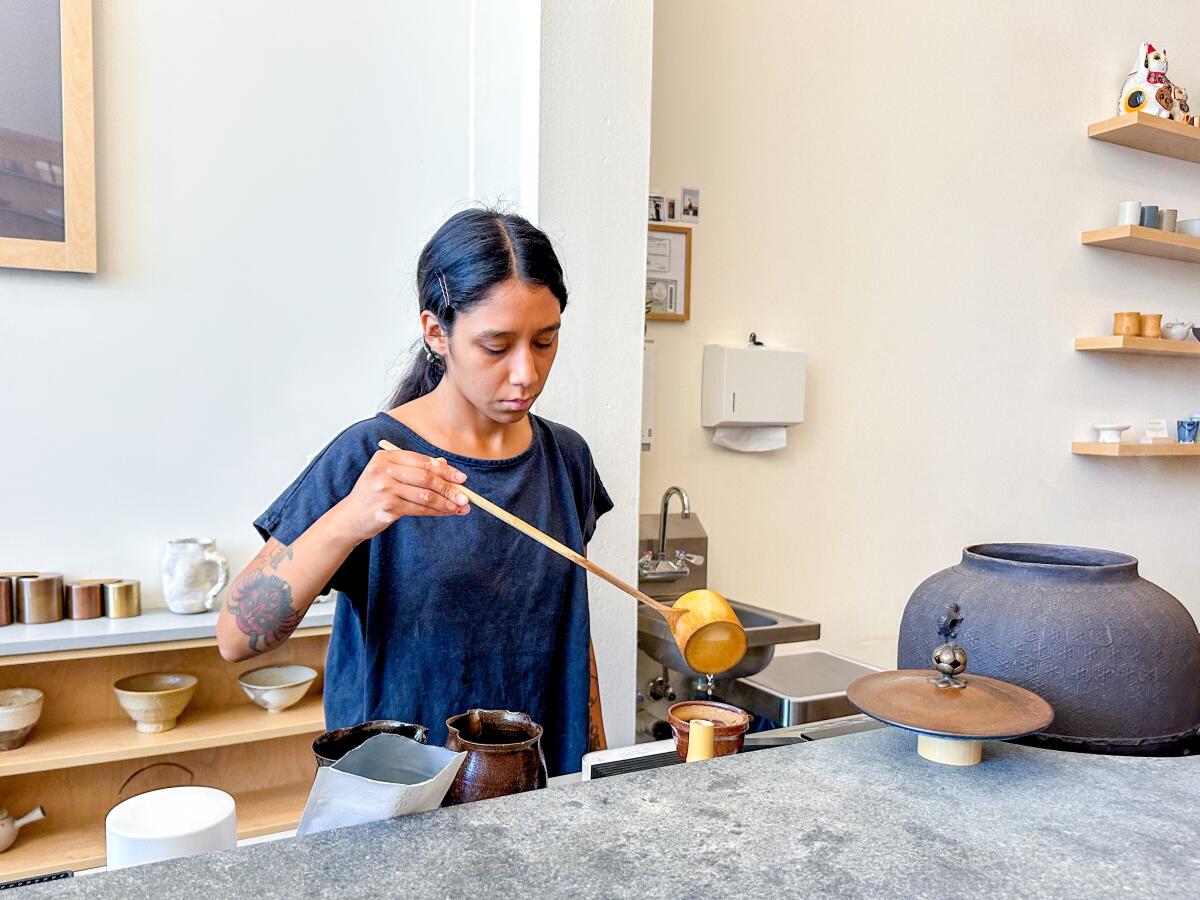
Step into Kettl, a new Japanese tea café in Los Feliz, and the contrast with global headlines is striking. The two-story café exudes calm. Customers sip matcha cortados served in rustic ceramic cups or select from lattes crafted with distinct flavor profiles — nutty, chocolaty, floral, or deeply umami. Sparkling iced matcha provides a lighter option, while staff-led tastings invite customers into a broader tea journey.
“I brewed it and was captivated by how much flavor was packed inside my tiny cup,” wrote Zach Mangan, Kettl’s founder, in his 2022 book Stories of Japanese Tea.
Mangan’s story reflects the path of many tea enthusiasts who become lifelong devotees. A jazz drummer in his twenties, he first encountered Japanese sincha while touring in Paris. Its aroma reminded him of freshly mowed grass, though he had never tasted it before. That single cup led him to years of travel in Japan, building connections with farmers and eventually becoming a respected importer.
From Brooklyn to Los Angeles
Mangan and his wife Minami opened Kettl’s first shop in Brooklyn in 2021. The Los Angeles location, delayed by permit and construction hurdles, finally opened in February 2025.
“Freshness changes everything,” Mangan explained in an interview. “The closer you are to the source, the more alive the tea becomes.”
Now, Kettl offers Angelenos not just matcha but also a carefully curated lineup of Japanese teas. The café hosts ticketed classes upstairs, covering topics like making iced matcha in summer. Its tasting bar, seating just four people, offers more intimate experiences. Prices start at $15 for a bowl of matcha, $10 for multi-steeping pots of other teas, and $70 for an omakase-style tea tasting.

L.A.’s Emerging Tea Culture
The matcha shortage 2025 underscores the fragility of global supply, yet in Los Angeles, tea culture is quietly flourishing. While bubble tea and casual matcha shops dominate, more specialized venues are carving out space.
Alhambra’s Tea Habitat offers by-appointment tastings of dan cong oolong, one of China’s most aromatic teas. Japanese-born consultant Tomoko Imade Dyen hosts seasonal tea tastings paired with food. Downtown’s The Good Liver also sells high-grade matcha, which often sells out quickly.
Against this backdrop, Kettl’s serene setting and regular imports from Japan feel unique. For many, it is not just a café but a window into the depth and diversity of Japanese tea.
Beyond Matcha: Exploring Sencha, Gyokuro, and Oolong
While matcha remains the star, Kettl is introducing customers to other Japanese teas. During tastings, Mangan compares the variety of sencha styles to French red wines or Scottish whiskies — diverse, complex, and deeply regional.
One offering, Hachiju Hachiya from Yame, delivered flavors of fresh edamame. Another, Hatsutsumi from Fukuoka, carried aromas reminiscent of Los Angeles after spring rain, with a buttery texture.
Kettl also features gyokuro, a shade-grown tea brewed with cooler water, producing sweet, ocean-like notes. Staff member Ashley Ruiz joked that the tasting notes for one rare gyokuro “were so enthusiastic, I knew Zach wrote them.” The flavor, she added, was almost like crabmeat.
And while Japanese oolong remains rare, Kettl provides a few select batches, described as light, expressive, and fruit-forward.


The Future of Matcha and Tea Culture
The matcha shortage 2025 highlights both the vulnerability of global tea supply chains and the resilience of tea culture. For enthusiasts, the shortage is not simply a crisis but an opportunity to explore new flavors.
Inside Kettl, groups gather around shared tables, sipping tea and engaging in long conversations. Some are there for the viral matcha craze; others discover sencha, gyokuro, or oolong for the first time.
As Mangan notes, “Tea is never just about the drink. It’s about the experience, the culture, and the connection it creates.”
For now, Los Angeles’ tea scene — though still niche — is expanding in exciting directions. And while the world grapples with the matcha shortage 2025, cafés like Kettl prove that tea culture is still very much alive, evolving, and ready for the future.
The matcha shortage 2025 is more than just a supply challenge — it reflects how global demand, climate pressures, and cultural trends collide. While wholesale prices soar and Japan struggles with reduced yields, tea enthusiasts are turning their attention not only to matcha but also to the broader spectrum of Japanese teas like sencha, gyokuro, and oolong. Cafés such as Kettl in Los Angeles show that despite shortages, the culture of tea is expanding, offering both comfort and discovery. The future of matcha may be uncertain, but the fascination with Japanese tea is only deepening.
Appreciating your time:
We appreciate you taking the time to read our most recent article! We appreciate your opinions and would be delighted to hear them. We value your opinions as we work hard to make improvements and deliver material that you find interesting.
Post a Comment:
In the space provided for comments below, please share your ideas, opinions, and suggestions. We can better understand your interests thanks to your input, which also guarantees that the material we offer will appeal to you. Get in Direct Contact with Us: Please use our “Contact Us” form if you would like to speak with us or if you have any special questions. We are open to questions, collaborations, and, of course, criticism. To fill out our contact form, click this link.
Stay Connected:
Don’t miss out on future updates and articles.