A Diplomatic Corps at a Crossroads
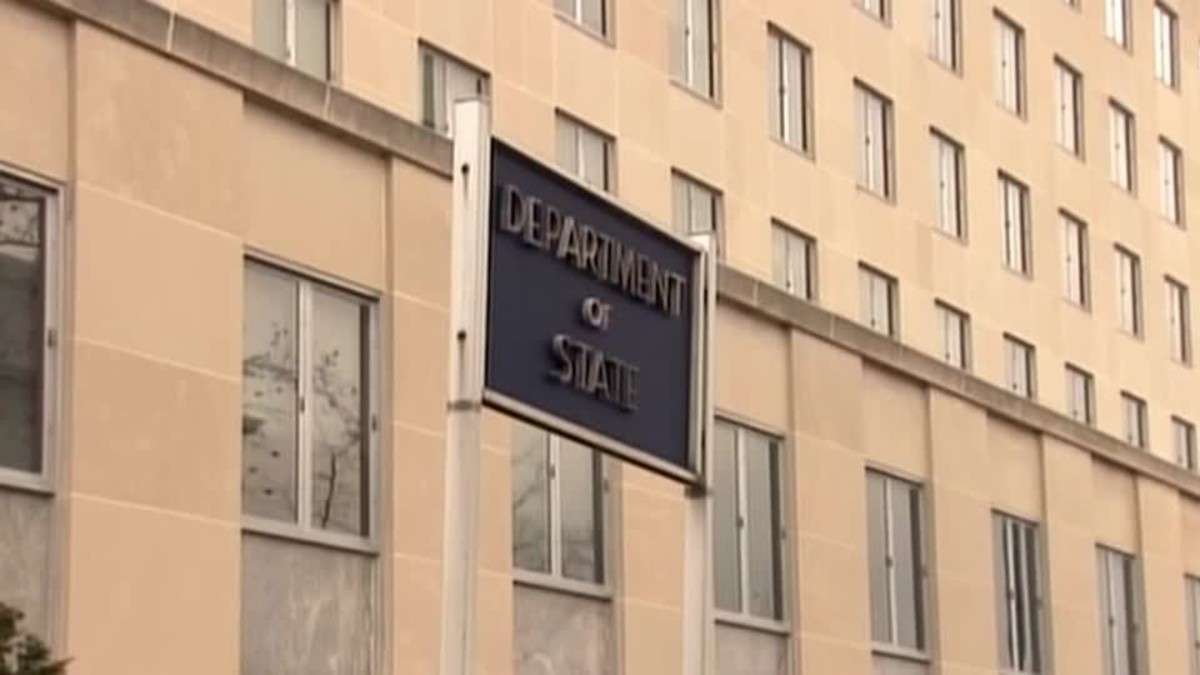
For many inside Foggy Bottom, the message from leadership confirmed what had long been in motion: a structural overhaul meant to align the department more closely with the administration’s worldview. Since taking office, President Trump has repeatedly voiced a desire to reduce what he calls a bloated bureaucracy, while reshaping foreign policy institutions to reflect his priorities.
“This isn’t just about staff numbers,” said one senior State Department official who spoke on condition of anonymity. “It’s about making sure our diplomatic functions are faster, sharper, and more focused. We’ve had redundancies for years, and those redundancies are now being addressed head-on.”
Deputy Secretary Rigas emphasized the transition in his internal email, signaling a pivot from planning to execution.
“Soon, the Department will be communicating to individuals affected by the reduction in force,” he wrote.
“Once notifications have taken place, the Department will enter the final stage of its reorganization and focus its attention on delivering results-driven diplomacy.”
Plans in Motion
The plans to Congress—submitted earlier this year—outlined a significant contraction of the State Department’s domestic workforce. Nearly 1,900 layoffs were proposed out of an estimated 18,000 employees, while an additional 1,575 were projected to resign through deferred exit agreements.
Although it remains unclear how many of the cuts will come from the civil service versus the foreign service, internal documents suggest a broad sweep across various categories of personnel. Over 300 offices and bureaus, out of the department’s 734, are expected to be merged, consolidated, or outright eliminated.
Court Clearance and Executive Directives
The green light came after a recent Supreme Court ruling, which cleared legal hurdles and gave the administration the authority to proceed with cuts and reorganizations across federal agencies. The ruling may ultimately allow for tens of thousands of layoffs across the broader federal workforce, not limited to the State Department.
In February, Trump issued an executive order directing Secretary of State Marco Rubio to lead the department’s restructuring. The goal, according to the order, is to ensure that foreign policy is implemented “faithfully” and in alignment with the president’s nationalistic platform.
Loyalty, Merit, and Pushback
The administration’s public justification revolves around boosting efficiency and “restoring merit,” but critics argue that institutional knowledge and global expertise may be casualties of the process. Particularly concerning to many observers is the potential loss of seasoned foreign service officers—career diplomats with years of regional, linguistic, and political expertise.
These changes come amid the administration’s broader promise to “clean out the deep state”—a term often used by Trump to describe career officials he deems disloyal or resistant to his agenda.
“The focus is on the org chart first,” said a senior State Department official. “Functions of a more efficient, capable, fast and effective State Department.”
Another spokesperson, Tammy Bruce, expanded on this rationale in a news briefing:
“When something is too large to operate, too bureaucratic to actually function and deliver action, it has to change.”
DEI Programs Scrapped
Alongside the structural changes, the department has dismantled most of its diversity, equity, and inclusion (DEI) programs, many of which had been gradually developed over recent years. While administration officials argue that the rollback is part of a merit-based realignment, the decision has drawn sharp criticism from former diplomats and civil rights advocates.
Last week, more than 130 retired U.S. diplomats and senior officials issued an open letter condemning the cuts. They warned that eliminating experienced foreign service officers and dissolving key offices would weaken America’s diplomatic credibility at a time of global uncertainty.
Reimagining Rights and Democracy
The reorganization will also see the elimination of the office of the Under Secretary for Civilian Security, Democracy, and Human Rights, along with other units tasked with monitoring war crimes and global conflicts.
In their place, the department is introducing a new structure. A Senate-confirmed Under Secretary for Foreign Assistance and Humanitarian Affairs will oversee a reimagined Bureau of Democracy, Human Rights, and Labor. This new bureau will reportedly promote diplomacy grounded in “traditional Western conceptions of core freedoms.”
The new structure will be headed by a Deputy Assistant Secretary for Democracy and Western Values, signaling a notable pivot in how the U.S. will frame its human rights and democracy promotion efforts globally.
As the notices begin, State Department employees and global allies alike are watching closely. For a department historically viewed as a steady hand in international affairs, the coming months will test whether efficiency can be achieved without losing the depth and nuance that define American diplomacy.

 Staff Reporter