Staff Reporter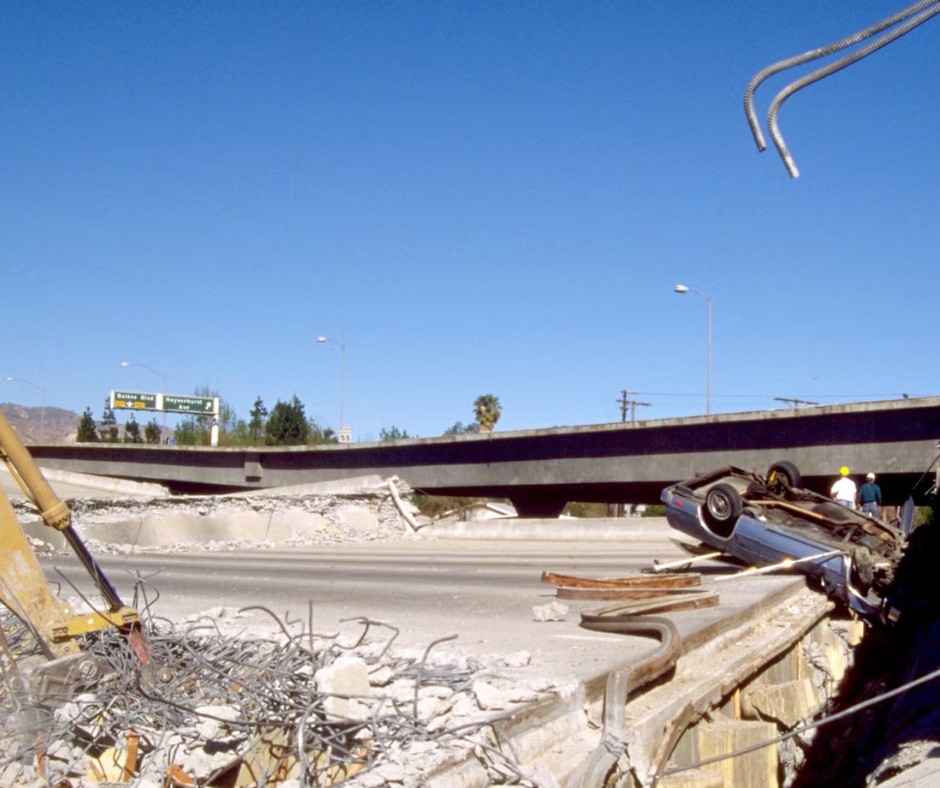
California is well-known for its earthquakes. But experts warn of a largely overlooked and dangerous threat: supershear earthquakes. Unlike typical quakes, these tremors move so fast they outrun their own seismic waves, amplifying destruction across wider areas.
Story Highlights:
-
Supershear earthquakes move faster than seismic waves, producing stronger shaking over larger areas.
-
One-third of global strike-slip earthquakes are supershear; California has many strike-slip faults near major cities.
-
Supershear quakes can deliver a “double strike”: an initial shock front followed by trailing waves.
-
Current California building codes do not fully account for energy traveling along fault lines.
-
Experts recommend denser fault monitoring, advanced simulations, and stronger infrastructure standards.
Researchers at USC Dornsife College of Letters, Arts and Sciences highlight this threat in an opinion piece published in Seismological Research Letters. They argue that California’s current earthquake hazard planning and building codes are not fully equipped to handle the unique and powerful effects of supershear earthquakes.
“While California is no more likely to have supershear earthquakes than other regions with major fault systems, this risk has been ignored for too long,” said Yehuda Ben-Zion, professor of earth sciences and director of the Statewide California Earthquake Center (SCEC) at USC Dornsife.
Ben-Zion emphasized that the frequency of these supershear ruptures has been underestimated. “We often think about earthquakes in terms of magnitude alone,” he said. “But supershear earthquakes carry a different kind of force, one that can spread stronger shaking over larger distances than we have planned for.”
Supershear earthquakes are often compared to sonic booms. Ahmed Elbanna, professor of earth sciences and SCEC director-designate, explained: “Just as a jet breaking the sound barrier creates an explosive shock in the air, a supershear rupture generates shock fronts in the ground. It literally breaks the shear wave speed barrier in rocks and produces destructive waves that are stronger than a normal earthquake.”
This added force can severely impact communities. Elbanna described what he calls a “double strike”—an initial jolt from the shock front, followed by trailing waves that continue to shake structures. “The combination of these forces means that damage can extend farther and hit harder than conventional quakes,” he said.
Globally, about one-third of large strike-slip earthquakes are supershear. This is particularly concerning in California, where many strike-slip faults run close to major cities. These faults are capable of producing magnitude 7 or higher earthquakes, making the potential impact even more severe.
“We cannot say exactly when or where the next earthquake will occur, or which one might be supershear,” Ben-Zion noted. “But what we do know is that multiple magnitude 7 earthquakes will hit California in the coming decades. They are inevitable, whether we are prepared or not.”
Current design standards in California focus on resisting the strongest shaking perpendicular to fault lines. But supershear earthquakes direct much of their energy along the fault itself. “Critical infrastructure, including bridges, hospitals, and power plants, should be designed to this higher standard,” Ben-Zion said. “So far, they are not.”
To mitigate the risks, experts call for stronger building codes, denser monitoring near major faults, and advanced computer simulations to model supershear scenarios.
“This is a collaborative effort,” Elbanna said. “USC and SCEC, with their experience and reputation in earthquake science, are in the right position to lead these efforts.”
The opinion piece was co-authored by Ben-Zion and Elbanna along with researchers from Caltech and the University of Illinois Urbana-Champaign, aiming to raise public and governmental awareness about this hidden but potentially devastating earthquake threat.
Appreciating your time:
We appreciate you taking the time to read our most recent article! We appreciate your opinions and would be delighted to hear them. We value your opinions as we work hard to make improvements and deliver material that you find interesting.
Post a Comment:
In the space provided for comments below, please share your ideas, opinions, and suggestions. We can better understand your interests thanks to your input, which also guarantees that the material we offer will appeal to you. Get in Direct Contact with Us: Please use our “Contact Us” form if you would like to speak with us or if you have any special questions. We are open to questions, collaborations, and, of course, criticism. To fill out our contact form, click this link.
Stay Connected:
Don’t miss out on future updates and articles.