Author Archives: Staff Reporter

Krysta Tsukahara

Krysta Tsukahara’s Final Moments: Tesla Cybertruck Crash Sparks Explosive Lawsuit

A fatal Tesla Cybertruck crash in Piedmont, California, has reignited debates over the automaker’s door design and safety systems. The accident claimed the lives of three college students, including 19-year-old Krysta Tsukahara, who allegedly survived the initial impact but died trapped inside the burning vehicle. Her parents are now suing Tesla, accusing the company of “conscious disregard” for safety.

Story Highlights

  • Victim: Krysta Tsukahara, 19, student at Savannah College of Art and Design
  • Crash Location: Piedmont, California
  • Incident: Cybertruck hit a retaining wall and tree, then burst into flames
  • Other Victims: Soren Dixon (driver), Jack Nelson (passenger)
  • Survivor: Jordan Miller escaped with help from a bystander
  • Cause of Death: Smoke inhalation and burns
  • Main Allegation: Tesla’s electronic door system failed after power loss
  • Substances Detected: Alcohol and cocaine in all occupants
  • Legal Moves: Lawsuits filed against Tesla and Dixon’s estate

The Final Moments of Krysta Tsukahara

According to court documents, Krysta Tsukahara, a sophomore at the Savannah College of Art and Design, was conscious and responsive after the Cybertruck slammed into a wall and tree in Piedmont. However, she could not escape when the vehicle caught fire.

Her parents, Carl and Noelle Tsukahara, allege that the Cybertruck’s electronic door release system malfunctioned after the crash, leaving their daughter trapped. The lawsuit claims the truck’s 12-volt battery, which powers the door mechanisms, failed during the collision — rendering both the electronic and manual release inoperable.

The result was a nightmare scenario. Onlookers tried to break into the truck, but heavy flames and reinforced glass made rescue impossible. Krysta ultimately died from smoke inhalation and burns, the lawsuit says.

Parents Accuse Tesla of “Conscious Disregard”

“It’s just a horror story,” said attorney Roger Dreyer, who represents the Tsukahara family.

“Tesla knows that it’s happened and that it’s going to happen, and they are doing nothing but selling the car with a system that entraps people and doesn’t provide a way of extraction.”

The lawsuit accuses Tesla of knowingly selling vehicles with dangerous design flaws. It cites over 30 prior incidents involving door system failures across different Tesla models. Dreyer argues that Tesla’s button-operated, handleless door design lacks an accessible manual override that passengers can easily find during emergencies.

What Happened That Night in Piedmont

The Cybertruck, driven by 19-year-old Soren Dixon, crashed into a retaining wall before colliding with a tree and bursting into flames. Krysta Tsukahara and Jack Nelson, 20, were trapped inside and died at the scene. A fourth passenger, Jordan Miller, managed to escape after a bystander shattered the windshield using a tree branch.

Toxicology reports revealed the presence of alcohol, cocaine, and other substances in the systems of all four occupants. The California Highway Patrol cited impaired driving and speeding as contributing factors, though attorneys for the Tsukahara family maintain that the door malfunction was a critical failure that should never have cost lives.

“They [Tesla] will want to blame Mr. Dixon, anybody but themselves,” Dreyer said.
“But this vehicle absolutely should not have entombed these individuals and my clients’ daughter. It’s our way of holding the wrongdoer accountable and correcting bad conduct.”

Tesla Cybertruck’s Safety Design Under Scrutiny

The lawsuit highlights Tesla’s door system, which opens with the push of a button rather than a traditional handle. The suit describes this mechanism as “prone to failure in crashes”, particularly if the 12-volt system is damaged. It further alleges that the manual release lever is not clearly visible or easy to access, especially in the chaos following a crash.

The Tesla Cybertruck, launched in November 2023, has faced a series of recalls and complaints about electronic malfunctions. In September, the National Highway Traffic Safety Administration (NHTSA) launched an investigation into reports of Tesla doors failing to open — with some parents forced to break windows to rescue children trapped inside.

Tesla has not yet commented publicly on the Krysta Tsukahara case or the ongoing investigation.

Two Lawsuits, One Common Allegation

On the same day the Tsukahara family’s lawsuit was filed, Jack Nelson’s parents, Todd and Stannye, also filed a separate case against Tesla. Both lawsuits seek punitive damages and allege that Tesla prioritized aesthetics and technology over basic safety.

Tesla was officially added as a defendant last week. While the company’s legal team has not responded to media inquiries, experts note that this case could have far-reaching implications for Tesla’s safety reputation and future Cybertruck sales.

Cybertruck’s Image Faces a Major Test

The Cybertruck, marketed as a revolutionary vehicle built for strength and endurance, now faces growing skepticism. Safety advocates argue that high-tech features shouldn’t compromise basic life-saving functions. For the Tsukahara family, the case represents not just personal loss but a mission to prevent similar tragedies.

As the investigation continues, the name Krysta Tsukahara has become central to the conversation about Tesla’s safety accountability — and whether innovation has come at too high a human cost.

Appreciating your time:

We appreciate you taking the time to read our most recent article! We appreciate your opinions and would be delighted to hear them. We value your opinions as we work hard to make improvements and deliver material that you find interesting.

Post a Comment:

In the space provided for comments below, please share your ideas, opinions, and suggestions. We can better understand your interests thanks to your input, which also guarantees that the material we offer will appeal to you. Get in Direct Contact with Us: Please use our “Contact Us” form if you would like to speak with us or if you have any special questions. We are open to questions, collaborations, and, of course, criticism. To fill out our contact form, click this link.

Stay Connected:

Don’t miss out on future updates and articles.

Gavin Newsom Calls Trump’s Oregon Deployment a “Dangerous Abuse of Power”

California Governor Gavin Newsom has sharply condemned the Trump Administration’s latest move to deploy 300 California National Guard troops to Portland, Oregon — a decision that came just after a federal court blocked President Trump’s attempt to federalize Oregon’s own National Guard.

In a strongly worded statement, Gavin Newsom accused the administration of crossing a dangerous constitutional line. “This is a breathtaking abuse of the law and power,” he said, adding that the President’s actions amounted to an assault on the rule of law itself.

“This isn’t about public safety, it’s about power,” Newsom declared. “The commander-in-chief is using the U.S. military as a political weapon against American citizens.”

Story Highlights

  • Court Blocks Trump’s Order: A federal judge stopped Trump’s attempt to federalize Oregon’s National Guard, citing constitutional violations.
  • California Troops Sent to Oregon: Despite the ruling, the Trump Administration ordered 300 California National Guard troops to Portland.
  • Gavin Newsom’s Reaction: The California Governor called the move an “abuse of power” and vowed to challenge it legally.
  • Judicial Rebuke: A Trump-appointed federal judge criticized the administration’s justification, saying it risked “blurring the line between civil and military power.”

The controversy began when the federal district court issued a ruling against Trump’s plan to assume control over Oregon’s National Guard. The court emphasized that such an action had no constitutional basis and would undermine the delicate balance between state and federal authority.

In defiance of that decision, the Trump Administration redirected 300 members of the California National Guard—troops who had previously been federalized during earlier unrest in Los Angeles—to Oregon. According to state officials, those original conditions have long since subsided, raising questions about the need and legality of this new deployment.

The federal judge, who was appointed by Trump himself, issued a stern rebuke of the administration’s rationale. “This historical tradition boils down to a simple proposition: this is a nation of Constitutional law, not martial law,” the court wrote. “Defendants have made a range of arguments that, if accepted, risk blurring the line between civil and military federal power — to the detriment of this nation.”

The ruling further found that the President’s reasoning was “not conceived in good faith” and was “simply untethered to the facts.”

Governor Gavin Newsom responded swiftly, signaling that California will take legal action to challenge what he described as an “unlawful and politically motivated deployment.” He also urged the public to remain vigilant in defending constitutional limits.

“We will take this fight to court,” Newsom said. “But the public cannot stay silent in the face of such reckless and authoritarian conduct by the President of the United States.”

The
move has sparked renewed debate over the limits of presidential power and the use of state-controlled military forces for political ends. Analysts note that Gavin Newsom’s firm stance reflects a broader concern among governors nationwide about preserving state authority against federal overreach.

As the legal battle looms, California’s governor remains resolute. In his words, “Ignoring court orders and treating judges as political opponents is not leadership — it’s lawlessness.”

Appreciating your time:

We appreciate you taking the time to read our most recent article! We appreciate your opinions and would be delighted to hear them. We value your opinions as we work hard to make improvements and deliver material that you find interesting.

Post a Comment:

In the space provided for comments below, please share your ideas, opinions, and suggestions. We can better understand your interests thanks to your input, which also guarantees that the material we offer will appeal to you. Get in Direct Contact with Us: Please use our “Contact Us” form if you would like to speak with us or if you have any special questions. We are open to questions, collaborations, and, of course, criticism. To fill out our contact form, click this link.

Stay Connected:

Don’t miss out on future updates and articles.

Karla Tatiana Vasquez Brings Salvadoran Flavor to L.A. with Flor de Izote

In the bustling neighborhoods of Los Angeles, a simple flower carries the weight of memory, culture, and home. For Karla Tatiana Vasquez, the sight of flor de izote — the cream-colored blossoms of the giant yucca — in her childhood kitchen was always a thrill.

Story Highlights

  • Karla Tatiana Vasquez celebrates her Salvadoran heritage through flor de izote, the national flower of El Salvador.

  • The giant yucca blooms across Los Angeles in August and September, widely available at Salvadoran street markets.

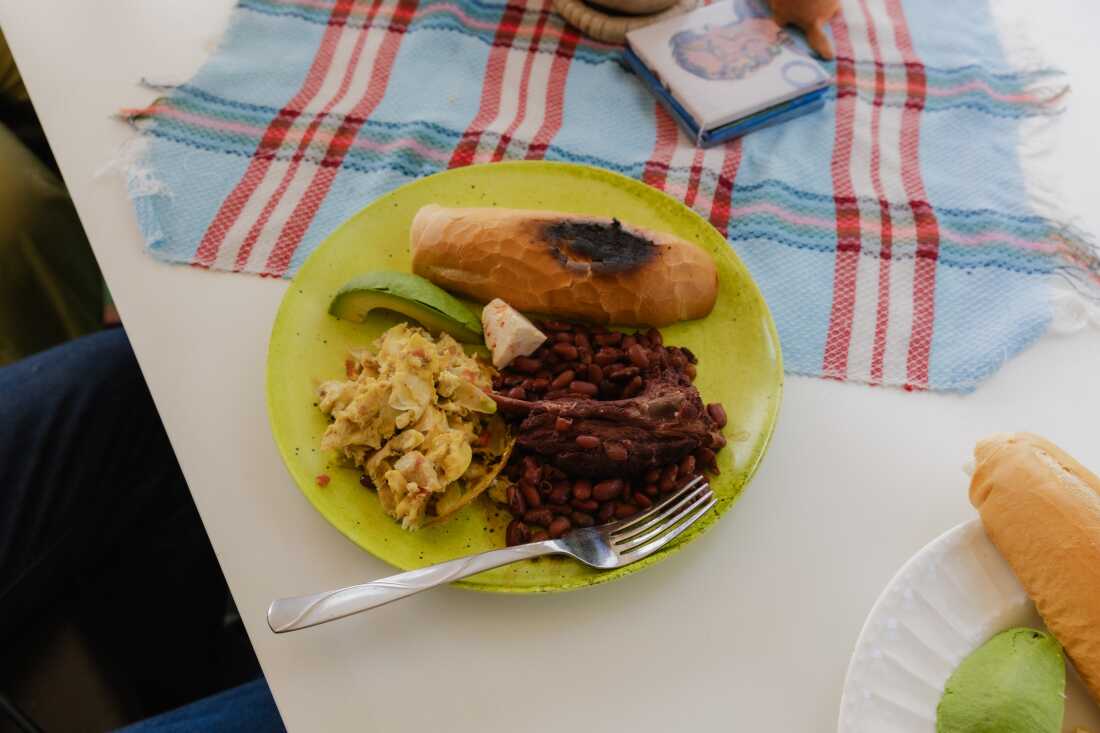
  • Popular dish: flor de izote con huevos — flower petals sautéed with onion, tomato, and scrambled eggs.

  • El Salvador Corridor in central L.A. hosts a vibrant market with flor de izote and other traditional ingredients.

  • The flowers connect Salvadoran immigrants in L.A. with their cultural roots and family memories.

“I would always see a bag, like a Home Depot bag, filled with this flower,” Vasquez recalls. “You could hear the rustling of the bag and my mom getting the flowers out and saying, ‘Karla, tenemos flor de izote.’”

“And then my dad would walk in,” she continues, “and he’d be like, ‘Quién encontró la flor de izote?’ Who found it, you know?”

Flor de izote, the national flower of El Salvador, is much more than a symbolic emblem. It is a seasonal delicacy cherished in Salvadoran households, especially in Los Angeles, where a dense Salvadoran community has kept traditions alive. The giant yucca, native to Mexico and Central America, grows widely in Southern California, blooming in August and September, transforming neighborhoods into a living patchwork of white flowers.

For Karla Tatiana Vasquez, the blooms are tied not only to taste but also to memory. Her father would point out the flowers from the freeway with excitement. “It was one of his favorite dishes,” she says. “Seeing them bloom every year reminded him of home.”

Vasquez’s mother prepared the flowers blanched and sautéed with onion, tomato, and scrambled eggs — a dish that became a cornerstone of family meals. Today, this same recipe appears in Karla Tatiana Vasquez’s 2024 cookbook, The SalviSoul Cookbook: Salvadoran Recipes and the Women Who Preserve Them, preserving the flavors and stories of Salvadoran women.

“It’s not just cooking,” Vasquez says. “It’s a connection to the past, to the land my parents left behind, and to the culture that raised me.”

In Los Angeles, flor de izote is everywhere during the blooming season. A simple stroll down Vermont Avenue in central L.A. leads to the El Salvador Corridor — a 14-block stretch of market stalls. Here, vendors hang flowers from tarp ceilings, pile them in boxes, and offer tips for preparing them. Prices range from $15 to $25 per branch, depending on size.

Jose Hernandez, a Salvadoran vendor, learned how to harvest and cook the blooms from his mother. “Fry up the petals with tomato, onion, and garlic,” he explains. “Be careful not to overcook. It’s riquísimo.” Another vendor, Jose Zepda, adds Salvadoran sour cream for a richer preparation.

Vasquez describes the process of preparing flor de izote con huevos in her kitchen as almost meditative. “You pick the petals carefully. The middle parts are slightly bitter, so you remove them. It gives you time with the ingredient — like prolonging a visit with an old friend.”

After blanching the petals, she sautés onion and tomato, adds the flower petals, and finally scrambles in eggs. The resulting dish has a soft, floral texture with a vegetal flavor reminiscent of artichokes.

“As a kid, I always loved the idea of eating flowers for breakfast,” Vasquez says. “Because what I knew of El Salvador was that it was a place of war that we had left and that it was dangerous. And in my mind, I kept thinking, ‘Well, a place that’s dangerous, but they eat flowers for breakfast?’ Like, make it make sense.”

For Karla Tatiana Vasquez, flor de izote represents more than a meal. It symbolizes her roots, her family’s journey, and the thriving Salvadoran culture in Los Angeles.

“I think for somebody who has had a hard time figuring out what is home,” she says, “it just makes me very happy that L.A. is a place that feels like my homeland. Like, that is just such a powerful feeling. Me da fortaleza. It gives me strength.”

Appreciating your time:

We appreciate you taking the time to read our most recent article! We appreciate your opinions and would be delighted to hear them. We value your opinions as we work hard to make improvements and deliver material that you find interesting.

Post a Comment:

In the space provided for comments below, please share your ideas, opinions, and suggestions. We can better understand your interests thanks to your input, which also guarantees that the material we offer will appeal to you. Get in Direct Contact with Us: Please use our “Contact Us” form if you would like to speak with us or if you have any special questions. We are open to questions, collaborations, and, of course, criticism. To fill out our contact form, click this link.

Stay Connected:

Don’t miss out on future updates and articles.

Beverly Hills, 90210 Turns 35: How the Teen Drama Redefined L.A. Pop Culture

Today marks 35 years since Beverly Hills, 90210 first hit the airwaves, changing the landscape of teen television and turning a ZIP code into a shorthand for wealth, drama, and teenage angst. The show, which ran for 10 seasons, followed twins Brandon and Brenda Walsh, Midwest transplants adjusting to life among the privileged youth of Beverly Hills.

Story Highlights:

  • Beverly Hills, 90210 celebrates 35 years since its premiere.

  • The show followed twins Brandon and Brenda Walsh navigating life in Beverly Hills.

  • Addressed teen issues including drug use, mental health, sexuality, and pregnancy.

  • Filmed in Los Angeles: Torrance High School, Occidental College, Altadena Walsh home.

  • Gabrielle Carteris became SAG-AFTRA president; Garth and Spelling launched 9021OMG podcast.

  • Shannon Doherty and Luke Perry, iconic cast members, have passed away.

  • Influence continues through the 2019 reboot and teen dramas like Gossip Girl and Euphoria.

  • LA locations contributed heavily to the show’s cultural resonance.

We wanted to tell stories that mattered to teenagers,” creator Darren Star once said. “The drama, the romance, the friendships—all of it reflected real experiences in a heightened, glamorous setting.

The series was not just about high school parties and cliffhangers. It confronted serious issues rarely addressed on network TV at the time, including teenage pregnancy, drug use, mental health struggles, and sexual experiences. Fans still remember Brenda Walsh’s complicated romance with Dylan McKay, a relationship that defined a generation of viewers.

Los Angeles itself was more than a backdrop—it was almost a character. Torrance High School stood in for West Beverly Hills High, while Occidental College doubled as the fictional California University. The show’s frequent exterior shots captured the city’s essence, from Sunset Strip clubs to Valley neighborhoods, showcasing a side of Los Angeles that had rarely been seen on TV. Even the Walsh family home in Altadena has endured the test of time, standing untouched beside a fire-ravaged property.

Filming in Los Angeles gave the show authenticity,” said Gabrielle Carteris, who played school paper editor Andrea Zuckerman. “Viewers recognized the city, and that connection made our stories more real.

Many cast members have remained active in Hollywood long after the show ended. Gabrielle Carteris served as president of SAG-AFTRA, leading 160,000 performers for over five years. Jennie Garth and Tori Spelling, beloved as Kelly Taylor and Donna Martin, launched a rewatch podcast called 9021OMG in 2020, offering fans behind-the-scenes anecdotes and reigniting interest in the series.

But the Beverly Hills, 90210 fandom has also felt loss. Shannon Doherty, who portrayed the fiery Brenda Walsh, passed away in July 2024 after a decade-long battle with breast cancer. Luke Perry, Dylan McKay and teen heartthrob, died in 2019 following a major stroke.

Despite these tragedies, the show’s influence continues. The 2019 reboot and spiritual successors like Gossip Girl, The O.C., and Euphoria carry the DNA of Beverly Hills, 90210, highlighting teen romance, family drama, and social issues. In a tribute to Perry, Riverdale cast him in his final role as a steady, blue-collar father, honoring his legacy.

The magic of Beverly Hills, 90210 was never just about the glamour,” said Tori Spelling. “It was about connection, friendship, and the challenges teens face everywhere.

After 35 years, Beverly Hills, 90210 remains more than a teen drama—it is a cultural touchstone. From the Walsh twins’ trials to iconic L.A. locations, the show shaped television storytelling, influenced generations, and left a lasting mark on pop culture. Its legacy continues through reboots, podcasts, and spiritual successors, proving that the drama, friendships, and challenges of Beverly Hills are timeless.

Appreciating your time:

We appreciate you taking the time to read our most recent article! We appreciate your opinions and would be delighted to hear them. We value your opinions as we work hard to make improvements and deliver material that you find interesting.

Post a Comment:

In the space provided for comments below, please share your ideas, opinions, and suggestions. We can better understand your interests thanks to your input, which also guarantees that the material we offer will appeal to you. Get in Direct Contact with Us: Please use our “Contact Us” form if you would like to speak with us or if you have any special questions. We are open to questions, collaborations, and, of course, criticism. To fill out our contact form, click this link.

Stay Connected:

Don’t miss out on future updates and articles.

US Geological Survey Confirms 3.4-Magnitude Earthquake Near Big Bear City

Early Sunday morning, the US Geological Survey reported a 3.4-magnitude earthquake striking close to Big Bear City, California. The tremor occurred at 2:51 a.m., with its epicenter recorded just four miles north of Big Bear City and at a shallow depth of three miles. The earthquake was felt across nearby communities, though no major damage has been reported so far.

Story Highlights

  • Magnitude: 3.4 earthquake confirmed by the US Geological Survey
  • Location: 4 miles north of Big Bear City, epicenter only 3 miles deep
  • Time: 2:51 a.m. on Sunday morning
  • Impact: Weak to light shaking in Big Bear City, Lucerne Valley, and Big Bear Lake
  • Reports: US Geological Survey encourages residents to file Felt Report forms

Residents from Lucerne Valley, Big Bear Lake, and Big Bear City confirmed experiencing weak to light shaking. The US Geological Survey highlighted that these firsthand accounts are crucial for better assessment of earthquakes in the region. “If you felt the earthquake, please share your report through the Felt Report form,” the agency noted.

According to The Fresno Bee, at least 16 online reports of the tremor were submitted to the USGS. While most described the shaking as minor, the shallow depth of the quake made it noticeable across multiple nearby towns.

Merced Sun-Star further reported that this was not an isolated incident. The area around Big Bear City has experienced three quakes of magnitude 2.5 or above in just the past week. On October 4, another 3.4 magnitude earthquake was recorded north of Big Bear City, while a 2.6 magnitude quake struck near Cabazon on October 5.

Earthquake Safety Advice

The US Geological Survey and local authorities have reminded residents about safety measures during such tremors. If driving, motorists are advised to pull over and stop immediately. Those in bed should turn face down and cover their head with a pillow. People indoors are urged to move out safely if possible, while wheelchair users should lock their wheels and remain in place until shaking stops.

What was the magnitude of the earthquake near Big Bear City?
The US Geological Survey confirmed a 3.4 magnitude earthquake.

What should people who experienced the earthquake do?
Residents should report their experiences through the US Geological Survey’s Felt Report form to help improve monitoring.

What is the US Geological Survey?
The US Geological Survey is a scientific agency under the U.S. Department of the Interior, focused on geography, geology, biology, and hydrology research.

The series of tremors near Big Bear City has once again put the spotlight on Southern California’s seismic activity. While Sunday’s quake was considered minor, experts stress that reporting experiences remains vital for improving earthquake preparedness.

Appreciating your time:

We appreciate you taking the time to read our most recent article! We appreciate your opinions and would be delighted to hear them. We value your opinions as we work hard to make improvements and deliver material that you find interesting.

Post a Comment:

In the space provided for comments below, please share your ideas, opinions, and suggestions. We can better understand your interests thanks to your input, which also guarantees that the material we offer will appeal to you. Get in Direct Contact with Us: Please use our “Contact Us” form if you would like to speak with us or if you have any special questions. We are open to questions, collaborations, and, of course, criticism. To fill out our contact form, click this link.

Stay Connected:

Don’t miss out on future updates and articles.

Trump’s 15% Cap Hits Indian Students Hard, US Universities Under Pressure

The Trump administration has released a controversial memo to nine leading US universities, outlining new conditions tied to federal funding. The 10-point directive, titled “A Compact for Academic Excellence in Higher Education”, has drawn attention for its strict cap on international students and sweeping academic reforms.

Under the new rules, international undergraduate students cannot exceed 15% of total enrollment, with no more than 5% from any single country. This effectively reshapes how universities admit foreign applicants, with a direct impact on Indian students—who represent one of the largest international student groups in the US.

STORY HIGHLIGHTS

  • Trump memo limits international enrollment to 15% of student body
  • No more than 5% allowed from one country, affecting Indian students most
  • Universities must abolish departments that undermine conservative views
  • Admissions and aid barred from using race or sex criteria
  • Tuition fees frozen for five years and admin costs reduced
  • Foreign students to be screened for American and Western values
  • Non-compliant universities risk losing federal funds

According to The Wall Street Journal, the memo also directs institutions to publish detailed admissions data, including GPA and test scores broken down by race, sex, and national origin. Universities must ensure all applicants sit for standardized exams such as the SAT. Tuition is required to remain frozen for five years, and graduate earnings by program must be shared publicly.

Beyond academics, the Trump memo makes a political demand: universities must distance themselves from what it calls “dominant ideology” and eliminate departments that “punish or belittle conservative ideas.”

Impact on Indian Students

The restrictions are expected to create major hurdles for Indian students, who together with Chinese students account for nearly 70% of all international enrollments in the US. For Indian applicants, particularly those from states like Telangana and Andhra Pradesh, the 5% per-country cap could mean fewer affordable college options and a fierce race for limited spots.

A student from Warangal shared with Deccan Chronicle:

“If the university collects information and sends it to the government, and if it does not align with their political ideologies, we might face major problems with our SEVIS, visas, or even deportations.”

Vishvanath Reddy, an Indian student from Hyderabad pursuing his master’s in the US, echoed the concerns:

“This is deeply unfair to international students. Immigrant students, especially from India, are the lifeblood of universities in the US. Trump cannot just put a five per cent cap on students belonging to a particular nationality. This will bring in a first-come-first-served policy, essentially penalising talented students.”

Universities Under Pressure

The nine universities that received the Trump memo are: University of Arizona, Brown University, Dartmouth College, MIT, University of Pennsylvania, University of Southern California, University of Texas, University of Virginia, and Vanderbilt University.

Institutions with endowments exceeding $2 million per student are also required to waive tuition fees for students in hard science programs. At the same time, foreign students must undergo screening for “alignment with American and Western values,” with universities required to share such data with federal agencies.

Broader Context

The Trump administration has linked compliance with federal benefits, warning that universities refusing to adopt the new guidelines could lose access to funding, while those that comply may receive financial rewards.

This move follows earlier high-profile disputes between the federal government and elite schools. Columbia University recently settled a $200 million investigation into alleged discrimination law breaches. Harvard faced a $2 billion funding freeze over antisemitism concerns, which was later struck down by a federal judge.

For now, the Trump memo has sparked debate about the balance between academic freedom, immigration policy, and national ideology. With Indian students at the center of this policy shift, the global academic community is closely watching how these measures will reshape higher education in the United States.

SEO Keywords: Trump memo universities, Trump international students cap, Trump Indian students impact, 15% enrollment cap, 5% per country limit, Trump higher education policy, American and Western values screening, Indian students in US universities.

Appreciating your time:

We appreciate you taking the time to read our most recent article! We appreciate your opinions and would be delighted to hear them. We value your opinions as we work hard to make improvements and deliver material that you find interesting.

Post a Comment:

In the space provided for comments below, please share your ideas, opinions, and suggestions. We can better understand your interests thanks to your input, which also guarantees that the material we offer will appeal to you. Get in Direct Contact with Us: Please use our “Contact Us” form if you would like to speak with us or if you have any special questions. We are open to questions, collaborations, and, of course, criticism. To fill out our contact form, click this link.

Stay Connected:

Don’t miss out on future updates and articles.

Step Inside Magic: Harry Potter Forbidden Forest Comes to Chicago

Fans of the wizarding world now have a chance to bring their favorite stories to life as “Harry Potter Forbidden Forest” makes its Midwestern debut. The immersive experience opened Friday at YMCA Camp Duncan in Ingleside, inviting visitors to step into one of the most iconic settings from the Harry Potter franchise.

Story Highlights

  • Event: Harry Potter Forbidden Forest Experience

  • Location: YMCA Camp Duncan, Ingleside, Illinois

  • Duration: 45–75 minutes

  • Interactive Elements: Spell casting, Patronus attempts, magical creatures

  • Visitor Count: Over 2 million globally across 10 cities

  • Extras: Gift shop, themed village, Butterbeer

  • Tickets Available Through: Nov. 2

According to event organizers, the attraction is designed to be fully interactive. Visitors can cast spells, attempt to summon a Patronus, and encounter magical creatures inspired by both the Harry Potter and Fantastic Beasts universes.

“We wanted to create an experience where fans can truly feel part of the wizarding world,” said a spokesperson for the production team. “Every detail, from the enchanted forest to the magical lighting, is crafted to make the experience as immersive as possible.”

Lights throughout the forest respond to the wave of a wand, adding a layer of enchantment as attendees navigate the winding trails. The journey through the Harry Potter Forbidden Forest takes approximately 45 to 75 minutes, offering enough time for visitors to explore, interact, and enjoy the magical atmosphere.

The event website notes that the attraction has already captivated more than two million visitors across 10 cities worldwide. It continues to draw fans eager to experience the magic first-hand.

At the end of the trail, visitors encounter a themed village and gift shop. The village offers a range of food and drinks, including the iconic Butterbeer, a favorite from the films.

“It’s not just about walking through a forest,” said another visitor. “You really feel like you’re part of the Harry Potter universe. Casting spells and seeing the forest lights react is unforgettable.”

Tickets for the Harry Potter Forbidden Forest experience are available online and will remain on sale through November 2.

Appreciating your time:

We appreciate you taking the time to read our most recent article! We appreciate your opinions and would be delighted to hear them. We value your opinions as we work hard to make improvements and deliver material that you find interesting.

Post a Comment:

In the space provided for comments below, please share your ideas, opinions, and suggestions. We can better understand your interests thanks to your input, which also guarantees that the material we offer will appeal to you. Get in Direct Contact with Us: Please use our “Contact Us” form if you would like to speak with us or if you have any special questions. We are open to questions, collaborations, and, of course, criticism. To fill out our contact form, click this link.

Stay Connected:

Don’t miss out on future updates and articles.

Starbucks Restructuring Hits LA: 20+ Stores Closed Across Greater Los Angeles

Starbucks is set to close hundreds of stores across the United States, with at least 20 locations in Greater Los Angeles affected. The move comes as part of a nationwide plan to restructure the brand, aiming to deliver a cozier, more welcoming experience for customers.

“We are focused on revitalizing the Starbucks brand and ensuring every location offers the experience our customers expect,” said CEO Brian Niccol in a message to employees. “This means some locations, unfortunately, will be closing if they are underperforming or not providing the intended Starbucks experience.”

In Los Angeles, the closures are already visible along Wilshire Boulevard, where seven Starbucks locations have shut their doors. For many commuters and midday coffee seekers, these stores were a regular stop.

In Monrovia, regular customers found a simple paper sign taped to the door at the corner of Foothill Boulevard and Myrtle Avenue last Friday. “We are closing this location as part of a company-wide restructuring,” the notice read, leaving locals surprised and disappointed. Meanwhile, Redlands’ Starbucks at Citrus Plaza also closed its doors last weekend.

The impact of these closures extends beyond just customers. Employees at affected Starbucks stores are facing immediate changes. Some baristas have been offered transfers to nearby locations, while others will face layoffs. In addition, Starbucks is cutting about 900 corporate and support positions nationwide—roles that handle behind-the-scenes operations critical to the brand.

“While customers may be able to find another Starbucks a few blocks away, the closures affect the communities and employees in a deeper way than just losing a daily coffee stop,” Niccol added.

Starbucks has not disclosed the total number of closures across Southern California, but the company confirmed that additional store shutdowns are expected in the coming weeks.

Story Highlights

  • Starbucks to close hundreds of stores nationwide, including 20+ in Greater Los Angeles.

  • Seven Wilshire Boulevard Starbucks locations already shuttered, key stops for commuters.

  • Monrovia and Redlands Starbucks stores closed with notice to local customers.

  • CEO Brian Niccol calls closures part of a nationwide brand revitalization plan.

  • Underperforming Starbucks stores and those not meeting brand standards targeted.

  • Employees offered transfers or face layoffs; 900 corporate and support roles cut.

  • Additional Southern California Starbucks closures expected.

Starbucks Locations Closing in Los Angeles

  • 12100 Santa Monica Blvd.

  • 1090 Wilshire Blvd.

  • 10612 National Blvd.

  • 4114 Sepulveda Blvd.

  • 3785 Wilshire Blvd.

  • 3450 Wilshire Blvd.

  • 3344 S La Cienega Blvd.

  • 3150 Wilshire Blvd.

  • 3006 S Sepulveda Blvd.

  • 300 S Santa Fe Ave.

  • 2134 W Sunset Blvd.

  • 1700 N Vermont Ave.

  • 138 S Central Ave

  • 8000 W Sunset Blvd.

  • 760-762 S Broadway

  • 729 N Vignes St.

  • 7122 Beverly Blvd.

  • 7100 Santa Monica Blvd.

  • 7055 W Sunset Blvd.

  • 600 W 9th St.

  • 5353 Wilshire Blvd.

  • 5020 Wilshire Blvd.

  • 444 South Flower St.

As Starbucks moves forward with its nationwide restructuring, the closures mark a significant shift for both the brand and the communities it serves. While loyal customers may find other nearby Starbucks locations, the impact on employees and neighborhoods will be felt for months to come. The company’s focus on revitalizing the Starbucks experience signals a new chapter—one that prioritizes quality, atmosphere, and efficiency over sheer number of stores.

Appreciating your time:

We appreciate you taking the time to read our most recent article! We appreciate your opinions and would be delighted to hear them. We value your opinions as we work hard to make improvements and deliver material that you find interesting.

Post a Comment:

In the space provided for comments below, please share your ideas, opinions, and suggestions. We can better understand your interests thanks to your input, which also guarantees that the material we offer will appeal to you. Get in Direct Contact with Us: Please use our “Contact Us” form if you would like to speak with us or if you have any special questions. We are open to questions, collaborations, and, of course, criticism. To fill out our contact form, click this link.

Stay Connected:

Don’t miss out on future updates and articles.
Los Angeles Overcrowded Shelters Urge Residents: Adopt a Shelter Dog This October

As Los Angeles shelters continue to operate beyond capacity, residents are being encouraged to give local pets a second chance this October during “Adopt a Shelter Dog Month.” With adoption fees lowered citywide, LA Animal Services aims to find homes for countless dogs, puppies, cats, and kittens in need.

Story Highlights:

  • Discounted adoption fees: dogs $51, puppies $75, cats $12.50, kittens $25

  • Themed adoption weekends: Oct. 4-5 (“Adopt a Shelter Dog”), Oct. 11-12 (“Trick or Treat”), Oct. 18-19 (“Make a Dog’s Day”), Oct. 27-28 (“Happy Halloween”)

  • Pets come spayed/neutered, vaccinated, and microchipped

  • Adopters receive Petco discounts and VCA Healthy Start Certificate with up to $250 in follow-up vet care

  • Dogs eligible for free training classes at Mission Hills’ People & Pet Innovation Center via Paws for Life K9 Rescue

  • Full adoption and foster listings available online

“October being Adopt a Shelter Dog Month is the perfect opportunity for Los Angeles residents to bring home a new furry friend,” said Annette Ramirez, Interim General Manager for LA Animal Services.

She added, “Our six Centers across Los Angeles City are filled with incredible pets in all shapes and sizes. Each one is ready to find a loving family and a safe, permanent home.”

Throughout October, LA Animal Services is offering themed adoption weekends, giving each weekend a special touch. The first weekend, Oct. 4-5, celebrates “Adopt a Shelter Dog,” followed by “Trick or Treat” on Oct. 11-12. The third weekend, Oct. 18-19, features “Make a Dog’s Day,” and the final weekend, Oct. 27-28, embraces the “Happy Halloween” theme.

“Every pet adopted this month comes fully prepared for its new home,” said Ramirez. “They are spayed or neutered, vaccinated, and microchipped to ensure a smooth transition. On top of that, each adopter receives a Petco flyer for discounts and a VCA Healthy Start Certificate, which covers up to $250 in veterinary care during the first two weeks.”

Dogs adopted through the program are also eligible for free training classes at the People & Pet Innovation Center in Mission Hills, in partnership with Paws for Life K9 Rescue.

For those hoping to meet their future companion, a full list of animals available for adoption or foster care is available online. From lively puppies eager to play to calm adult cats seeking a quiet home, Los Angeles shelters offer pets ready to bring joy to families across the city this fall.

Appreciating your time:

We appreciate you taking the time to read our most recent article! We appreciate your opinions and would be delighted to hear them. We value your opinions as we work hard to make improvements and deliver material that you find interesting.

Post a Comment:

In the space provided for comments below, please share your ideas, opinions, and suggestions. We can better understand your interests thanks to your input, which also guarantees that the material we offer will appeal to you. Get in Direct Contact with Us: Please use our “Contact Us” form if you would like to speak with us or if you have any special questions. We are open to questions, collaborations, and, of course, criticism. To fill out our contact form, click this link.

Stay Connected:

Don’t miss out on future updates and articles.

California Breakthrough: Uber and Lyft Drivers Can Now Form Unions

In a move hailed as historic for ride-hailing workers, California Governor Gavin Newsom on Friday signed legislation that creates a pathway for Uber and Lyft drivers to organize industry-wide and negotiate for better pay and benefits. The agreement positions California as only the second U.S. state, after Massachusetts, to allow app-based drivers to unionize, offering them an unprecedented voice in shaping their work conditions.

Story Highlights:

  • California becomes the second U.S. state allowing Uber and Lyft drivers to unionize.

  • AB 1340 outlines pay and benefits bargaining rights for drivers.

  • SB 371 reduces insurance coverage requirements, lowering costs for drivers and riders.

  • Union recognition earliest by May 2026; requires 10% sign-up and 30% vote.

  • Proposition 22 limits bargaining power despite unionization efforts.

  • Insurance currently accounts for 32-45% of ride fares in California.

Unlike Massachusetts, where unionization was achieved through a costly ballot measure, California’s deal emerged from months of negotiations involving Sacramento Democrats, labor leaders from SEIU, and representatives from Uber and Lyft. This approach allowed lawmakers to avoid a high-stakes campaign while securing terms that could benefit drivers immediately.

At a press conference, Newsom emphasized the importance of the deal for drivers’ futures.

“This agreement offers Uber and Lyft drivers a voice, to give them choice, give them dignity, and a say about their future,” Newsom said.

He added,

“I say that because it needs to be said: I’m not naive about how people are feeling about their future.”

The legislation, AB 1340, authored by Assemblymembers Buffy Wicks and Marc Berman and sponsored by SEIU California, sets clear terms for bargaining. It allows Uber and Lyft drivers to seek increased pay, health insurance, and other employee benefits previously unavailable to app-based workers. Tia Orr, Executive Director of SEIU California, contrasted the California approach with federal actions under the Trump administration, which she said sought to undermine workers’ rights.

“Trump is gutting workers’ fundamental right to come together and demand fair pay and treatment,” Orr said.
“But here in California, we are sending a different message: when workers are empowered and valued, everyone wins. Shared prosperity starts with unions for all workers.”

Alongside AB 1340, Newsom signed SB 371, a bill authored by Senator Christopher Cabaldon, which lowers insurance coverage requirements for Uber and Lyft vehicles involved in accidents caused by underinsured drivers. Under the new law, coverage drops from $1 million to $300,000 per incident.

Uber estimates that insurance costs currently make up 32 percent of an average fare in California, rising to 45 percent in Los Angeles County. Uber’s California policy head, Ramona Prieto, described the legislation as a balance between drivers’ rights and the cost of services for passengers.

“AB 1340 and SB 371 together represent a compromise that lowers costs for riders while creating stronger voices for Uber and Lyft drivers,” Prieto said.

Despite the legislative breakthrough, unionization will not be immediate. Uber and Lyft drivers cannot apply for recognition until May 2026 at the earliest. Labor leaders must first gather signatures from at least 10 percent of California’s roughly 800,000 ride-hailing drivers. After that, 30 percent of drivers must vote in favor of forming a union before negotiations with the companies can begin.

Even if a union is established, Uber and Lyft drivers will face limitations under Proposition 22, a 2020 state ballot measure that prevents app-based workers from being classified as traditional employees. Uber and Lyft spent over $200 million to pass the measure, ensuring that drivers remain independent contractors.

The dual passage of AB 1340 and SB 371 marks a significant moment in the evolving gig economy. Advocates say it gives drivers more agency and protection while still allowing companies to manage operational costs. For Uber and Lyft drivers in California, the deal signals a potential shift in how app-based labor is valued and represented across the nation.

Appreciating your time:

We appreciate you taking the time to read our most recent article! We appreciate your opinions and would be delighted to hear them. We value your opinions as we work hard to make improvements and deliver material that you find interesting.

Post a Comment:

In the space provided for comments below, please share your ideas, opinions, and suggestions. We can better understand your interests thanks to your input, which also guarantees that the material we offer will appeal to you. Get in Direct Contact with Us: Please use our “Contact Us” form if you would like to speak with us or if you have any special questions. We are open to questions, collaborations, and, of course, criticism. To fill out our contact form, click this link.

Stay Connected:

Don’t miss out on future updates and articles.