

In the bustling neighborhoods of Los Angeles, a simple flower carries the weight of memory, culture, and home. For Karla Tatiana Vasquez, the sight of flor de izote — the cream-colored blossoms of the giant yucca — in her childhood kitchen was always a thrill.
Story Highlights
-
Karla Tatiana Vasquez celebrates her Salvadoran heritage through flor de izote, the national flower of El Salvador.
-
The giant yucca blooms across Los Angeles in August and September, widely available at Salvadoran street markets.
-
Popular dish: flor de izote con huevos — flower petals sautéed with onion, tomato, and scrambled eggs.
-
El Salvador Corridor in central L.A. hosts a vibrant market with flor de izote and other traditional ingredients.
-
The flowers connect Salvadoran immigrants in L.A. with their cultural roots and family memories.
“I would always see a bag, like a Home Depot bag, filled with this flower,” Vasquez recalls. “You could hear the rustling of the bag and my mom getting the flowers out and saying, ‘Karla, tenemos flor de izote.’”
“And then my dad would walk in,” she continues, “and he’d be like, ‘Quién encontró la flor de izote?’ Who found it, you know?”
Flor de izote, the national flower of El Salvador, is much more than a symbolic emblem. It is a seasonal delicacy cherished in Salvadoran households, especially in Los Angeles, where a dense Salvadoran community has kept traditions alive. The giant yucca, native to Mexico and Central America, grows widely in Southern California, blooming in August and September, transforming neighborhoods into a living patchwork of white flowers.


For Karla Tatiana Vasquez, the blooms are tied not only to taste but also to memory. Her father would point out the flowers from the freeway with excitement. “It was one of his favorite dishes,” she says. “Seeing them bloom every year reminded him of home.”
Vasquez’s mother prepared the flowers blanched and sautéed with onion, tomato, and scrambled eggs — a dish that became a cornerstone of family meals. Today, this same recipe appears in Karla Tatiana Vasquez’s 2024 cookbook, The SalviSoul Cookbook: Salvadoran Recipes and the Women Who Preserve Them, preserving the flavors and stories of Salvadoran women.
“It’s not just cooking,” Vasquez says. “It’s a connection to the past, to the land my parents left behind, and to the culture that raised me.”
In Los Angeles, flor de izote is everywhere during the blooming season. A simple stroll down Vermont Avenue in central L.A. leads to the El Salvador Corridor — a 14-block stretch of market stalls. Here, vendors hang flowers from tarp ceilings, pile them in boxes, and offer tips for preparing them. Prices range from $15 to $25 per branch, depending on size.


Jose Hernandez, a Salvadoran vendor, learned how to harvest and cook the blooms from his mother. “Fry up the petals with tomato, onion, and garlic,” he explains. “Be careful not to overcook. It’s riquísimo.” Another vendor, Jose Zepda, adds Salvadoran sour cream for a richer preparation.
Vasquez describes the process of preparing flor de izote con huevos in her kitchen as almost meditative. “You pick the petals carefully. The middle parts are slightly bitter, so you remove them. It gives you time with the ingredient — like prolonging a visit with an old friend.”
After blanching the petals, she sautés onion and tomato, adds the flower petals, and finally scrambles in eggs. The resulting dish has a soft, floral texture with a vegetal flavor reminiscent of artichokes.
“As a kid, I always loved the idea of eating flowers for breakfast,” Vasquez says. “Because what I knew of El Salvador was that it was a place of war that we had left and that it was dangerous. And in my mind, I kept thinking, ‘Well, a place that’s dangerous, but they eat flowers for breakfast?’ Like, make it make sense.”
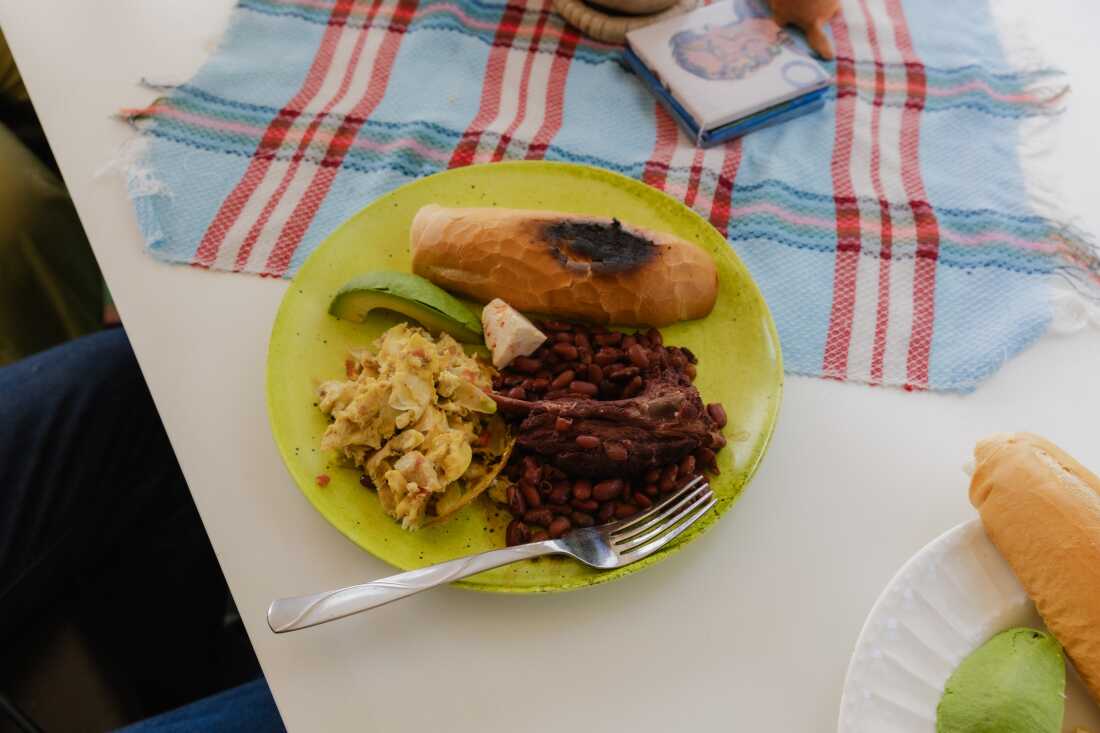

For Karla Tatiana Vasquez, flor de izote represents more than a meal. It symbolizes her roots, her family’s journey, and the thriving Salvadoran culture in Los Angeles.
“I think for somebody who has had a hard time figuring out what is home,” she says, “it just makes me very happy that L.A. is a place that feels like my homeland. Like, that is just such a powerful feeling. Me da fortaleza. It gives me strength.”
Appreciating your time:
We appreciate you taking the time to read our most recent article! We appreciate your opinions and would be delighted to hear them. We value your opinions as we work hard to make improvements and deliver material that you find interesting.
Post a Comment:
In the space provided for comments below, please share your ideas, opinions, and suggestions. We can better understand your interests thanks to your input, which also guarantees that the material we offer will appeal to you. Get in Direct Contact with Us: Please use our “Contact Us” form if you would like to speak with us or if you have any special questions. We are open to questions, collaborations, and, of course, criticism. To fill out our contact form, click this link.
Stay Connected:
Don’t miss out on future updates and articles.