Tag Archives: Pacific Ocean

La Niña

La Niña Returns: NOAA Warns of Shifting Pacific Ocean Climate Patterns

The La Niña phenomenon has officially returned to the equatorial Pacific Ocean, reshaping global weather patterns once again. The National Oceanic and Atmospheric Administration (NOAA) has confirmed that La Niña conditions emerged in September 2025 and are expected to persist through the Northern Hemisphere winter. Forecasters say there’s a 55% chance that conditions could shift back to ENSO-neutral by early 2026.

Story Highlights

  • NOAA confirms La Niña development across the central and eastern Pacific.
  • Niño-3.4 index: Currently -0.5°C, meeting the official threshold.
  • Expected to persist: Through winter 2025–26, with a weak intensity.
  • Maritime attention: Panama Canal operations stabilized as rainfall improved.
  • Financial rebound: Canal revenues jumped 14.4% to $5.7 billion in FY2025.
  • Next update: ENSO Diagnostics Discussion on November 13, 2025.

According to NOAA’s latest assessment, the climate signal is clear.

“La Niña conditions emerged in September 2025, as indicated by the expansion of below-average sea surface temperatures across the central and eastern equatorial Pacific Ocean,” the agency reported.

The weekly Niño-3.4 index value has now reached -0.5°C, officially marking the onset of La Niña. This cooling of the Pacific waters is a reversal from the El Niño phase that dominated much of 2023 and early 2024.

NOAA scientists note that the current event is accompanied by negative subsurface temperature anomalies and easterly low-level wind patterns stretching across the western and east-central Pacific. The atmospheric response is also evident — with enhanced convection over Indonesia and suppressed storm activity near the Date Line — typical hallmarks of a La Niña setup.

Panama Canal Rebounds Amid Weather Shift

For maritime industries, especially those operating through the Panama Canal, the change in ocean patterns is more than scientific news — it’s an operational relief. The strong El Niño of 2023 had caused record-low water levels in Gatun Lake, severely disrupting global shipping routes and reducing daily vessel capacity.

However, as the climate gradually transitioned toward La Niña in late 2024, rainfall returned to the region. Increased precipitation helped the Panama Canal Authority (ACP) restore normal transit operations, easing months of logistical bottlenecks.

On Wednesday, the Panama Canal reported strong financial results for fiscal year 2025. Revenues climbed 14.4% to $5.7 billion, while vessel transits rose 19.3% to 13,404 over the 12-month period ending September 30. Canal officials credited improved weather and water conditions for stabilizing the system.

“After a challenging year under El Niño, the recent La Niña patterns have allowed us to replenish water levels and restore full operational capacity,” an ACP spokesperson said. “We remain cautiously optimistic as conditions stabilize.”

La Niña Outlook: Weak but Watchful

NOAA’s climate forecast suggests that the current La Niña will likely remain weak, with the three-month average Niño-3.4 index staying between -0.5°C and -0.9°C. Even so, the phenomenon can subtly influence regional rainfall, temperature, and storm frequency across parts of the Americas, Asia, and Africa.

While strong La Niña events tend to trigger widespread disruptions — such as droughts in South America or intense monsoons in Asia — weaker phases like the present one usually produce localized but noticeable weather variations. Climate experts caution that the full impact will unfold over the winter of 2025–26, depending on how long the Pacific cooling persists.

“Even a weak La Niña can shift rainfall and temperature patterns across continents,” NOAA climatologists explained. “Monitoring ocean-atmosphere interactions in the coming months will be crucial to understanding the broader effects.”

The next ENSO Diagnostics Discussion is scheduled for November 13, 2025, when NOAA will release updated projections on the La Niña outlook and potential ENSO-neutral transition in early 2026.

For now, scientists and maritime authorities remain alert. The Pacific’s cooling waters, while modest, serve as a reminder of the ocean’s far-reaching influence on global weather systems — and the delicate balance that connects climate, commerce, and communities worldwide.

Appreciating your time:

We appreciate you taking the time to read our most recent article! We appreciate your opinions and would be delighted to hear them. We value your opinions as we work hard to make improvements and deliver material that you find interesting.

Post a Comment:

In the space provided for comments below, please share your ideas, opinions, and suggestions. We can better understand your interests thanks to your input, which also guarantees that the material we offer will appeal to you. Get in Direct Contact with Us: Please use our “Contact Us” form if you would like to speak with us or if you have any special questions. We are open to questions, collaborations, and, of course, criticism. To fill out our contact form, click this link.

Stay Connected:

Don’t miss out on future updates and articles.

Massive Kamchatka Quake Sparks Pacific Tsunami Chaos

In a jarring display of nature’s raw force, one of the most powerful earthquakes ever recorded—an 8.8 magnitude tremor—struck off Russia’s Far East near the Kamchatka Peninsula, triggering tsunami waves across Japan, Hawaii, the U.S. West Coast, and South America. While the globe held its breath, waves surged, alarms blared, and evacuations swept coastlines. Though injuries and damages were limited, the threat loomed for hours. With volcanoes stirring and coastlines trembling, the Pacific rim witnessed a sudden ballet of tectonic might and tsunami tension on an unprecedented scale.

STORY HIGHLIGHTS

  • Magnitude 8.8 earthquake hit Russia’s Kamchatka Peninsula

  • Triggered tsunami alerts across the Pacific

  • Minor injuries reported, but no severe damage confirmed

  • Aftershocks reached 6.9 magnitude

  • Japan, Hawaii, U.S. West Coast, Chile, Colombia issued tsunami warnings

  • Klyuchevskaya Sopka volcano started erupting post-quake

  • Nuclear plants in Japan reported unaffected

A powerful and rare seismic event struck off Russia’s Far East early Wednesday, rattling coastlines across the Pacific and prompting urgent tsunami warnings as far afield as Japan, Hawaii, the U.S. West Coast, and parts of South America. The earthquake, registering a magnitude of 8.8, hit near the Kamchatka Peninsula and ranks among the strongest quakes recorded globally in recent decades.

The earthquake’s epicenter lay offshore, approximately 120 kilometers from Petropavlovsk-Kamchatsky, Kamchatka’s regional capital, at a depth of about 21 kilometers. Several strong aftershocks followed—some reaching as high as 6.9 in magnitude—raising alarm and forcing widespread evacuations in multiple countries.

In Kamchatka, the immediate reaction was one of fear and flight. As tremors shook buildings, residents poured into the streets and sought safety inland. Local officials confirmed that several people suffered injuries during the chaos—mainly while attempting to flee structures. Fortunately, all were reported to be in stable condition.

“The earthquake was intense,” said Oleg Melnikov, head of Kamchatka’s regional health department. “Several individuals were injured while exiting buildings in haste. One hospital patient was hurt while trying to escape through a window. Thankfully, there were no fatalities, and the condition of the injured is under control.”

A local kindergarten undergoing renovation was damaged, but since no children or staff were inside at the time, authorities described the situation as “contained.”

Shortly after the quake, tsunami waves began to reach coastal zones. According to Russia’s Oceanology Institute, some of the waves may have risen between 10 to 15 meters (30 to 50 feet) in remote coastal sections, though areas near population centers saw waves closer to 6 meters. Severo-Kurilsk, a key port city in the Kuril Islands, saw flooding and a temporary blackout, prompting a local emergency declaration.

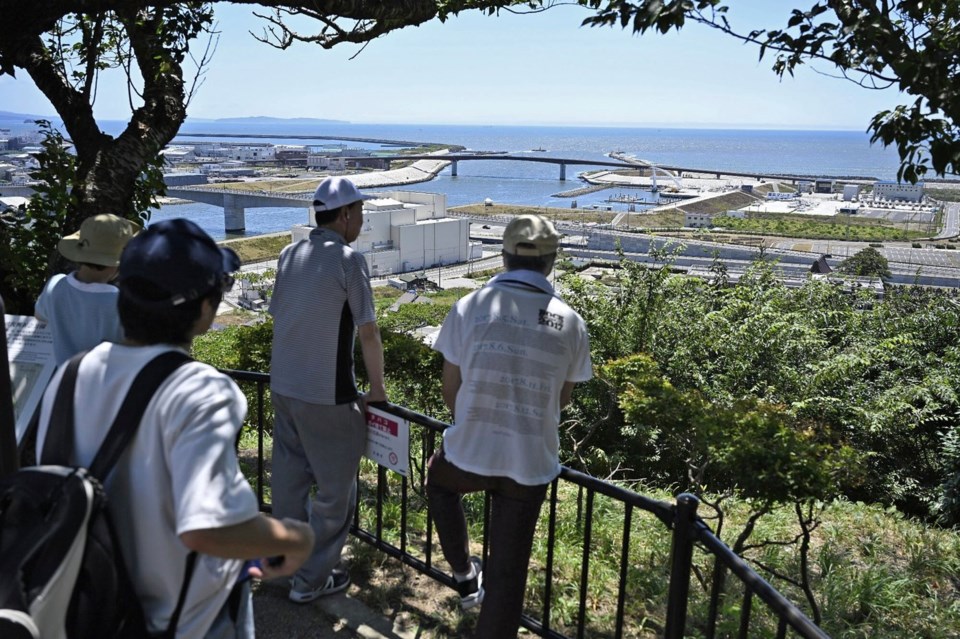
Across the Pacific, concern spread swiftly. In Japan, memories of the devastating 2011 tsunami remain raw. Sirens blared across towns along the Pacific coast. In Iwaki City, Fukushima, residents gathered in hilltop parks and shelters after breakwater gates were sealed.

In a moment reminiscent of a past disaster, residents moved swiftly and quietly. “We just grabbed a few things and left,” said a woman in Kuji Port, where a two-foot wave was recorded. “We couldn’t take any chances.”

Japan’s Meteorological Agency reported waves of up to 60 centimeters in Hokkaido and multiple coastal points. One person sustained injuries amid the evacuations. By late Wednesday, Japan downgraded the tsunami alert to an advisory but continued to warn of dangerous currents.

Meanwhile in Hawaii, traffic gridlocked in parts of Honolulu as residents and tourists tried to move away from vulnerable shorelines. In Waikiki, evacuation orders stirred uncertainty among visitors.

“We’ve got water, we got some snacks … we’re going to stay elevated,” said Jimmy Markowski, visiting from Hot Springs, Arkansas. “This is our first tsunami warning ever. So this is all new to us.”

Hawaii Emergency Management officials lifted evacuation orders a few hours later but maintained a tsunami advisory across the state, urging caution.

“As you return home, still stay off the beach and stay out of the water,” James Barros, Hawaii’s Emergency Management Administrator, advised. “Strong currents could still pose a threat.”

Across the U.S. West Coast, the situation remained tense through the morning. Crescent City in northern California saw water rise nearly 3.6 feet. Though not catastrophic, the surge prompted alerts about dangerous wave activity in several areas.

“This is not a major tsunami, but dangerous currents and strong waves may pose a risk to those near the water,” said a statement from the Oregon Department of Emergency Management. In Alaska’s Aleutian Islands, wave activity was also observed, although no damage was reported.

Even as the immediate danger appeared to recede in North America, South America faced new fears. Chile, which sits on a major fault line, moved swiftly.

“Let’s act calmly and follow official instructions,” said Chilean President Gabriel Boric on social media. “Remember that the first wave is usually not the strongest.”

Chile’s National Emergency Office declared evacuation orders for much of the Pacific coastline. Similar precautions were taken in Colombia, where beaches were evacuated and maritime traffic restricted.

In Ecuador, schools were closed in the Galapagos Islands and coastal regions. The Philippines, Mexico, New Zealand, and several Pacific island nations—including Tonga, Samoa, and the Federated States of Micronesia—issued alerts, asking citizens to avoid the shore.

Back in Kamchatka, a new concern emerged as lava began to flow from the Klyuchevskaya Sopka volcano, the largest active volcano in the Northern Hemisphere. Observers noted explosions and smoke, adding another layer of volatility to the already unstable environment.

While the earthquake ranks among the strongest ever recorded, it fortunately did not trigger widespread destruction or mass casualties—something authorities attribute to the quake’s offshore epicenter and effective emergency protocols.

Secretary of Homeland Security Kristi Noem, speaking from Chile during an official visit, emphasized the scale of the international response.

“We were fully deployed and ready to respond if necessary,” she told reporters. “But we are grateful that we didn’t have to deal with the situation that this could have been.”

The International Atomic Energy Agency confirmed that Japan’s nuclear plants, including the vulnerable Fukushima Daiichi, were unaffected. Workers at the facility moved to higher ground and continued operations remotely.

As Wednesday drew to a close, tsunami warnings were gradually downgraded across most of the affected regions. However, lingering risks from unpredictable ocean surges and strong currents remained.

The quake served as another reminder of the Pacific “Ring of Fire,” a seismically active zone where most of the world’s earthquakes and volcanic eruptions occur. In a world still grappling with climate extremes and natural disasters, Wednesday’s event reaffirmed the need for constant vigilance—and the power of global coordination.

As seismic waves faded and coastlines steadied, the world exhaled a cautious sigh of relief. Though the earthquake off Russia’s Kamchatka Peninsula unleashed powerful forces and stirred deep memories of past tragedies, swift responses, efficient alerts, and public discipline helped avert catastrophe. With only minor injuries and limited damage reported, the global reaction stood as a testament to preparedness in the face of natural fury. Yet, the quake serves as a sobering reminder that the Pacific’s restless tectonic heart can stir without warning—and its echoes travel far beyond the epicenter.

Appreciating your time:

We appreciate you taking the time to read our most recent article! We appreciate your opinions and would be delighted to hear them. We value your opinions as we work hard to make improvements and deliver material that you find interesting.

Post a Comment:

In the space provided for comments below, please share your ideas, opinions, and suggestions. We can better understand your interests thanks to your input, which also guarantees that the material we offer will appeal to you. Get in Direct Contact with Us: Please use our “Contact Us” form if you would like to speak with us or if you have any special questions. We are open to questions, collaborations, and, of course, criticism. To fill out our contact form, click this link.

Stay Connected:

Don’t miss out on future updates and articles.