Staff Reporter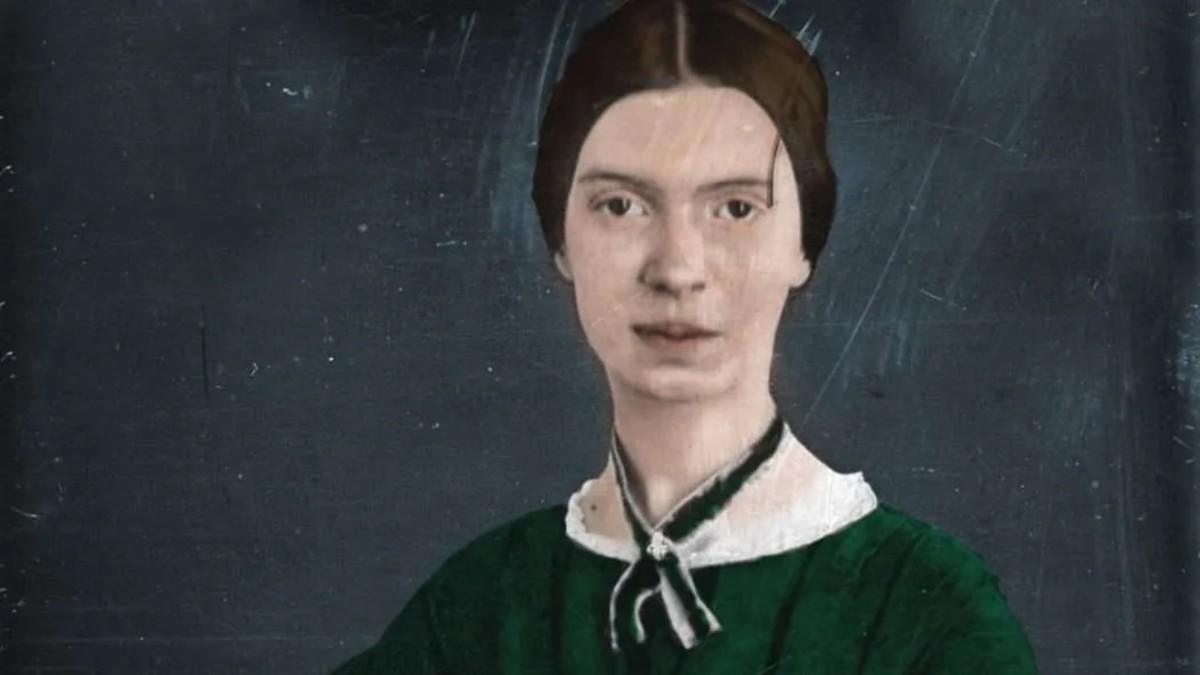
Emily Dickinson—America’s most paradoxical poet. A woman who lived in near-complete seclusion, yet shook the foundations of modern poetry. A figure draped in white, tending flowers in Amherst, while scribbling verses that would ignite centuries of debate. Is she a genius beyond measure, or a cryptic recluse whose work was misread by generations? Here, we unravel the acclaim, the attacks, and the controversies that make Dickinson one of the most fascinating literary enigmas.
“She Dared to Disturb the Universe” – Why Critics Call Her a Genius
Emily Dickinson was no ordinary lyricist; she reinvented the language of poetry. Her unconventional punctuation, fractured syntax, and startling metaphors made her a pioneer of modernism long before the movement had a name.
Harold Bloom, in his magisterial The Western Canon, thundered:
“Emily Dickinson is the singular genius of American poetry—her originality rivals that of Dante and Shakespeare.”
Helen Vendler, the queen of close reading, declared:
“Dickinson’s poems are the most concentrated act of mind in American letters.”
Her poetic weapons? The dash—sharp as a scalpel. The capital letter—flashing like a blade. The slant rhyme—defying perfect harmony in favor of provocative dissonance. Critics hail her as “the inventor of the inward lyric,” a poet who compressed eternity into 16 lines.
The Shadow Side: Critics Who Doubted Her
Not everyone saw a prophetess. In the early 20th century, some critics dismissed her as a “domestic oddity,” writing “half-formed verses in the attic.” Biographer Martha Dickinson Bianchi (her niece) romanticized Emily into a saintly spinster, which scholars later called “myth-making”—a sanitization of her passion and intellectual daring.
Others accused modern critics of “over-reading” her cryptic lines, arguing that her obscurity invited interpretive chaos. Still today, online debates rage: Was she a mystic, a proto-feminist, or simply eccentric?
“The Brain—is Wider than the Sky”—Or the Room?
She almost never left her Amherst home. She often spoke through a closed door rather than face visitors. And yes, she sometimes wore only white dresses. Was it artistic rebellion or mental fragility?
Controversy thrives:
-
Medical theories suggest agoraphobia or severe anxiety.
-
Others call her isolation a “creative monastery,” where she forged her universe in a single room.
In a letter, she confessed:
“The Soul selects her own Society—Then—shuts the Door—”
Was this metaphor—or manifesto?

Secret Loves and Scandalous Affections
Forget the spinster myth. Dickinson’s letters burn with passion—especially those to Susan Gilbert Dickinson, her sister-in-law and lifelong confidante. Over 250 letters and poems were written to Susan, some explicitly yearning:
“With the exception of Shakespeare, you have told me more than anyone else.”
Critics now see these as lesbian or queer-coded love poems, though some scholars argue for a more complex intimacy beyond modern labels. Editors in the 19th century erased Susan’s name from many poems, replacing it with neutral pronouns—a censorship that still sparks outrage.
Her emotional life didn’t end there. Judge Otis Lord courted her late in life; Samuel Bowles, the journalist, was another figure in her orbit. Yet Emily never married. Instead, she married language—and made eternity her only partner.

The Editorial Betrayal: “Proofread the Soul Out of Her”
After her death in 1886, Dickinson left behind nearly 1,800 poems—many bound into hand-sewn fascicles. When the first editions appeared, Mabel Loomis Todd and Thomas Wentworth Higginson butchered them to Victorian taste:
-
They removed dashes,
-
Standardized capitalization,
-
Added titles Emily never wrote,
-
And in doing so, flattened the shock of her original voice.
For decades, readers encountered a polite Dickinson—a far cry from the wild experimentalist she truly was. Modern scholars call it “the great literary crime of the 19th century.”
Resurrection Through Manuscripts: The Gorgeous Nothings
Fast-forward to the 21st century. Scholars restore Emily’s radical texts—scraps on envelopes, margin jottings—through facsimile projects like The Gorgeous Nothings. These artifacts reveal a poet who painted with paper, turning torn envelopes into canvases for immortal lines. Dickinson was not just a writer—she was an architect of silence and space.
Susan Howe, avant-garde poet and critic, hails this materiality:
“Dickinson is a cosmos. The visual chaos of her manuscripts is the soul of her poetry.”

Pop Culture’s “Sexy Dickinson”: Rewriting the Myth
From Apple TV+’s “Dickinson” to Wild Nights with Emily, a cultural revolution is reframing her. No longer the bloodless saint, she is “bold, queer, and fiercely alive.”
Showrunner Alena Smith embraced the term “Sexy Dickinson”, declaring:
“It’s time to rescue Emily from the attic and set her poems on fire.”
The Controversial Poems That Still Scandalize
-
“I heard a Fly buzz—when I died—”
Critics debate: Is the fly an angel of death—or a symbol of meaninglessness? Harold Bloom saw in it “the triumph of the trivial.” -
“Wild Nights—Wild Nights!”
A hymn of erotic ecstasy, shocking in 1860—and still startling today. -
“My Life had stood—a Loaded Gun—”
Interpreted as feminist rage, divine possession, or proto-nihilism. It’s a poem that critics call “a live grenade.”
Acclamations That Cemented Her Legacy
-
Harold Bloom:
“Her originality rivals that of Dante and Shakespeare.” -
Adrienne Rich:
“She dared to write what women never wrote—what even men feared.” -
Thomas Wentworth Higginson (her mentor):
“The poet whom I feared most to edit—because she startled me like lightning.”
Why Emily Dickinson Still Rules the Unruly Heart of Poetry
Today, Dickinson is everywhere: in academic syllabi, in feminist manifestos, in queer theory, in Instagram captions. She anticipated modernist fragmentation, feminist subjectivity, and even the aesthetics of minimalism—decades before any movement claimed them.
Her poems are brief storms: no titles, no compromises, only raw lightning strikes of thought. She wrote, she hid, she died—and now she dominates.
Perhaps Susan Howe said it best:
“A poet is salted with fire. Dickinson’s fire still burns the page.”
Emily Dickinson remains an unparalleled figure in American literature—mysterious, rebellious, and timeless. While her poetry broke boundaries with raw intimacy and existential depth, her reclusive life sparked endless debate and fascination. Critics hail her as a visionary who revolutionized poetic form, while others question her unconventional choices and cryptic isolation. Yet, it is precisely this duality—her brilliance and enigma—that secures her immortality in literary history. Emily Dickinson was not just a poet; she was a silent storm that rewrote the language of emotions forever.
Appreciating your time:
We appreciate you taking the time to read our most recent article! We appreciate your opinions and would be delighted to hear them. We value your opinions as we work hard to make improvements and deliver material that you find interesting.
Post a Comment:
In the space provided for comments below, please share your ideas, opinions, and suggestions. We can better understand your interests thanks to your input, which also guarantees that the material we offer will appeal to you. Get in Direct Contact with Us: Please use our “Contact Us” form if you would like to speak with us or if you have any special questions. We are open to questions, collaborations, and, of course, criticism. To fill out our contact form, click this link.
Stay Connected:
Don’t miss out on future updates and articles.