Category Archives: Crisis

F-35

F-35 Goes Down, Pilot Pops Out: Navy Confirms Safe Ejection After Fiery Crash

In a startling yet safely contained turn of events, a U.S. Navy F-35C fighter jet crashed near Naval Air Station Lemoore in central California, sending flames soaring through a cotton field. The pilot, ejecting just in time, was swiftly recovered and is expected to recover well. As smoke settled, authorities confirmed no other injuries. Lockheed Martin, the aircraft’s maker, pledged support as investigations began. This incident, involving one of the world’s most advanced jets, has once again placed the F-35 under a sharp spotlight.

STORY HIGHLIGHTS

  • U.S. Navy F-35C jet crashes near Naval Air Station Lemoore

  • Pilot ejected safely; recovered with parachute nearby

  • Wreckage found engulfed in flames in cotton field

  • Assigned to VFA-125 “Rough Raiders” squadron

  • Investigation into crash cause is ongoing

  • F-35C is carrier-based variant of advanced fighter series

  • Lockheed Martin monitoring situation and offering support

  • 20 F-35-related incidents reported between 2014–2024

Navy Confirms Safe Ejection

In a brief statement issued by Naval Air Station Lemoore, the Navy confirmed the successful ejection of the pilot and emphasized that no other personnel were impacted by the crash.

“The pilot successfully ejected and is safe. There are no additional affected personnel,”
Statement from NAS Lemoore

The incident occurred at approximately 6:40 p.m., prompting a rapid emergency response. Local authorities, including the Fresno County Sheriff’s Office, received multiple reports of the crash and dispatched personnel to the scene. The crash site, located in an agricultural area, was difficult to access. However, first responders bulldozed a path to reach the burning jet and were able to extinguish the fire before it spread.

Local Authorities Respond Swiftly

The Fresno County Sheriff’s Office later confirmed the discovery of the pilot, who had landed with a parachute in a nearby field.

“The pilot was located in a field close to the crash site and transported to a hospital for evaluation. He is expected to be in good condition,”
Fresno County Sheriff’s Office

The precise cause of the crash has not yet been determined. Military investigators have been deployed to assess the wreckage and review flight data, as part of a standard protocol in such incidents.

Lockheed Martin Reacts

Lockheed Martin, the aerospace company that produces the F-35 fighter jets, responded publicly, offering its cooperation and reaffirming its commitment to safety.

“We are aware of the F-35 incident at Naval Air Station Lemoore. Safety is our priority, and we are standing by to support the United States Navy as needed,”
Lockheed Martin Statement

What Is the F-35C?

The F-35C is one of three variants of the F-35 Lightning II Joint Strike Fighter. It is specifically designed for aircraft carrier operations and is considered one of the most advanced stealth multirole fighter jets in service today. The F-35A is the standard version used by the U.S. Air Force, while the F-35B is capable of vertical take-off and landing and used by the U.S. Marine Corps.

The F-35 program has faced both acclaim for its advanced capabilities and scrutiny due to cost and mechanical issues. The crash near NAS Lemoore marks another entry in the aircraft’s complex operational history. According to the F-16.net’s global database tracking F-35 events, there have been 20 recorded F-35 incidents between 2014 and 2024, spanning different models and countries.

Next Steps

With the immediate safety of personnel confirmed, focus now turns to understanding what led to the crash. Investigators will examine potential mechanical failures, human factors, or environmental conditions that could have played a role. The Navy has not released additional information regarding the mission, speed, or altitude at the time of the crash.

While such incidents remain rare given the jet’s widespread deployment, each occurrence prompts a thorough review to prevent recurrence. The pilot’s successful ejection is a testament to the advanced safety systems integrated into the F-35 program.

As the investigation continues, both the military and aerospace industry will be watching closely.

As the investigation unfolds, the Navy and defense experts will closely examine the circumstances behind the crash of the F-35C—an aircraft symbolizing cutting-edge aerial power. While the pilot’s safe escape offers relief, the incident raises renewed attention on operational safety and mechanical reliability. With Lockheed Martin standing by and officials probing deeper, this episode serves as both a reminder of modern aviation’s risks and a testament to the life-saving systems onboard. For now, the skies are calm, but questions continue to circle above.

Appreciating your time:

We appreciate you taking the time to read our most recent article! We appreciate your opinions and would be delighted to hear them. We value your opinions as we work hard to make improvements and deliver material that you find interesting.

Post a Comment:

In the space provided for comments below, please share your ideas, opinions, and suggestions. We can better understand your interests thanks to your input, which also guarantees that the material we offer will appeal to you. Get in Direct Contact with Us: Please use our “Contact Us” form if you would like to speak with us or if you have any special questions. We are open to questions, collaborations, and, of course, criticism. To fill out our contact form, click this link.

Stay Connected:

Don’t miss out on future updates and articles.

Massive Kamchatka Quake Sparks Pacific Tsunami Chaos

In a jarring display of nature’s raw force, one of the most powerful earthquakes ever recorded—an 8.8 magnitude tremor—struck off Russia’s Far East near the Kamchatka Peninsula, triggering tsunami waves across Japan, Hawaii, the U.S. West Coast, and South America. While the globe held its breath, waves surged, alarms blared, and evacuations swept coastlines. Though injuries and damages were limited, the threat loomed for hours. With volcanoes stirring and coastlines trembling, the Pacific rim witnessed a sudden ballet of tectonic might and tsunami tension on an unprecedented scale.

STORY HIGHLIGHTS

  • Magnitude 8.8 earthquake hit Russia’s Kamchatka Peninsula

  • Triggered tsunami alerts across the Pacific

  • Minor injuries reported, but no severe damage confirmed

  • Aftershocks reached 6.9 magnitude

  • Japan, Hawaii, U.S. West Coast, Chile, Colombia issued tsunami warnings

  • Klyuchevskaya Sopka volcano started erupting post-quake

  • Nuclear plants in Japan reported unaffected

A powerful and rare seismic event struck off Russia’s Far East early Wednesday, rattling coastlines across the Pacific and prompting urgent tsunami warnings as far afield as Japan, Hawaii, the U.S. West Coast, and parts of South America. The earthquake, registering a magnitude of 8.8, hit near the Kamchatka Peninsula and ranks among the strongest quakes recorded globally in recent decades.

The earthquake’s epicenter lay offshore, approximately 120 kilometers from Petropavlovsk-Kamchatsky, Kamchatka’s regional capital, at a depth of about 21 kilometers. Several strong aftershocks followed—some reaching as high as 6.9 in magnitude—raising alarm and forcing widespread evacuations in multiple countries.

In Kamchatka, the immediate reaction was one of fear and flight. As tremors shook buildings, residents poured into the streets and sought safety inland. Local officials confirmed that several people suffered injuries during the chaos—mainly while attempting to flee structures. Fortunately, all were reported to be in stable condition.

“The earthquake was intense,” said Oleg Melnikov, head of Kamchatka’s regional health department. “Several individuals were injured while exiting buildings in haste. One hospital patient was hurt while trying to escape through a window. Thankfully, there were no fatalities, and the condition of the injured is under control.”

A local kindergarten undergoing renovation was damaged, but since no children or staff were inside at the time, authorities described the situation as “contained.”

Shortly after the quake, tsunami waves began to reach coastal zones. According to Russia’s Oceanology Institute, some of the waves may have risen between 10 to 15 meters (30 to 50 feet) in remote coastal sections, though areas near population centers saw waves closer to 6 meters. Severo-Kurilsk, a key port city in the Kuril Islands, saw flooding and a temporary blackout, prompting a local emergency declaration.

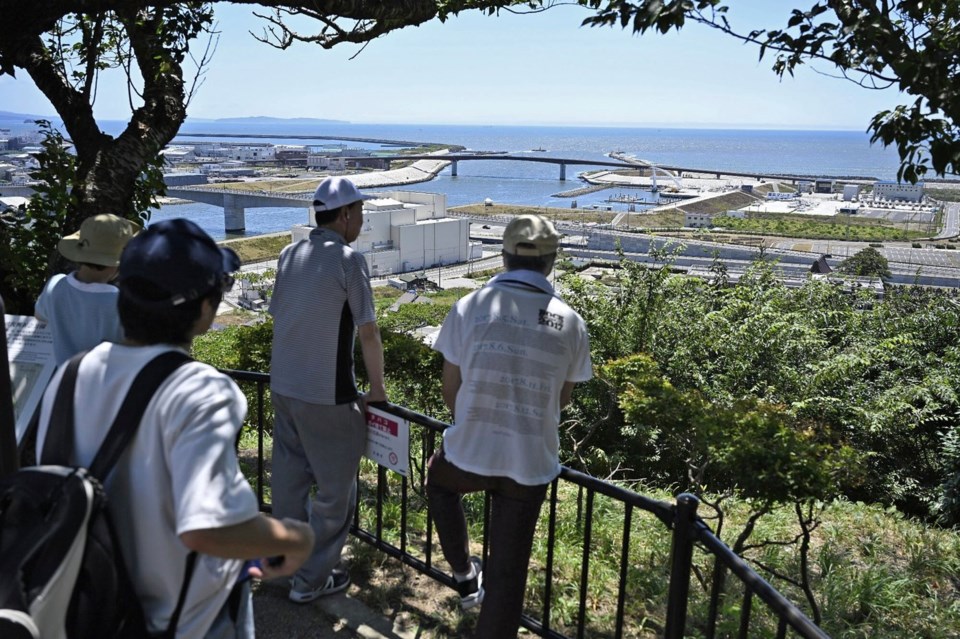
Across the Pacific, concern spread swiftly. In Japan, memories of the devastating 2011 tsunami remain raw. Sirens blared across towns along the Pacific coast. In Iwaki City, Fukushima, residents gathered in hilltop parks and shelters after breakwater gates were sealed.

In a moment reminiscent of a past disaster, residents moved swiftly and quietly. “We just grabbed a few things and left,” said a woman in Kuji Port, where a two-foot wave was recorded. “We couldn’t take any chances.”

Japan’s Meteorological Agency reported waves of up to 60 centimeters in Hokkaido and multiple coastal points. One person sustained injuries amid the evacuations. By late Wednesday, Japan downgraded the tsunami alert to an advisory but continued to warn of dangerous currents.

Meanwhile in Hawaii, traffic gridlocked in parts of Honolulu as residents and tourists tried to move away from vulnerable shorelines. In Waikiki, evacuation orders stirred uncertainty among visitors.

“We’ve got water, we got some snacks … we’re going to stay elevated,” said Jimmy Markowski, visiting from Hot Springs, Arkansas. “This is our first tsunami warning ever. So this is all new to us.”

Hawaii Emergency Management officials lifted evacuation orders a few hours later but maintained a tsunami advisory across the state, urging caution.

“As you return home, still stay off the beach and stay out of the water,” James Barros, Hawaii’s Emergency Management Administrator, advised. “Strong currents could still pose a threat.”

Across the U.S. West Coast, the situation remained tense through the morning. Crescent City in northern California saw water rise nearly 3.6 feet. Though not catastrophic, the surge prompted alerts about dangerous wave activity in several areas.

“This is not a major tsunami, but dangerous currents and strong waves may pose a risk to those near the water,” said a statement from the Oregon Department of Emergency Management. In Alaska’s Aleutian Islands, wave activity was also observed, although no damage was reported.

Even as the immediate danger appeared to recede in North America, South America faced new fears. Chile, which sits on a major fault line, moved swiftly.

“Let’s act calmly and follow official instructions,” said Chilean President Gabriel Boric on social media. “Remember that the first wave is usually not the strongest.”

Chile’s National Emergency Office declared evacuation orders for much of the Pacific coastline. Similar precautions were taken in Colombia, where beaches were evacuated and maritime traffic restricted.

In Ecuador, schools were closed in the Galapagos Islands and coastal regions. The Philippines, Mexico, New Zealand, and several Pacific island nations—including Tonga, Samoa, and the Federated States of Micronesia—issued alerts, asking citizens to avoid the shore.

Back in Kamchatka, a new concern emerged as lava began to flow from the Klyuchevskaya Sopka volcano, the largest active volcano in the Northern Hemisphere. Observers noted explosions and smoke, adding another layer of volatility to the already unstable environment.

While the earthquake ranks among the strongest ever recorded, it fortunately did not trigger widespread destruction or mass casualties—something authorities attribute to the quake’s offshore epicenter and effective emergency protocols.

Secretary of Homeland Security Kristi Noem, speaking from Chile during an official visit, emphasized the scale of the international response.

“We were fully deployed and ready to respond if necessary,” she told reporters. “But we are grateful that we didn’t have to deal with the situation that this could have been.”

The International Atomic Energy Agency confirmed that Japan’s nuclear plants, including the vulnerable Fukushima Daiichi, were unaffected. Workers at the facility moved to higher ground and continued operations remotely.

As Wednesday drew to a close, tsunami warnings were gradually downgraded across most of the affected regions. However, lingering risks from unpredictable ocean surges and strong currents remained.

The quake served as another reminder of the Pacific “Ring of Fire,” a seismically active zone where most of the world’s earthquakes and volcanic eruptions occur. In a world still grappling with climate extremes and natural disasters, Wednesday’s event reaffirmed the need for constant vigilance—and the power of global coordination.

As seismic waves faded and coastlines steadied, the world exhaled a cautious sigh of relief. Though the earthquake off Russia’s Kamchatka Peninsula unleashed powerful forces and stirred deep memories of past tragedies, swift responses, efficient alerts, and public discipline helped avert catastrophe. With only minor injuries and limited damage reported, the global reaction stood as a testament to preparedness in the face of natural fury. Yet, the quake serves as a sobering reminder that the Pacific’s restless tectonic heart can stir without warning—and its echoes travel far beyond the epicenter.

Appreciating your time:

We appreciate you taking the time to read our most recent article! We appreciate your opinions and would be delighted to hear them. We value your opinions as we work hard to make improvements and deliver material that you find interesting.

Post a Comment:

In the space provided for comments below, please share your ideas, opinions, and suggestions. We can better understand your interests thanks to your input, which also guarantees that the material we offer will appeal to you. Get in Direct Contact with Us: Please use our “Contact Us” form if you would like to speak with us or if you have any special questions. We are open to questions, collaborations, and, of course, criticism. To fill out our contact form, click this link.

Stay Connected:

Don’t miss out on future updates and articles.